9 Best Pre-Employment Assessment Tools for Small Businesses (2026)
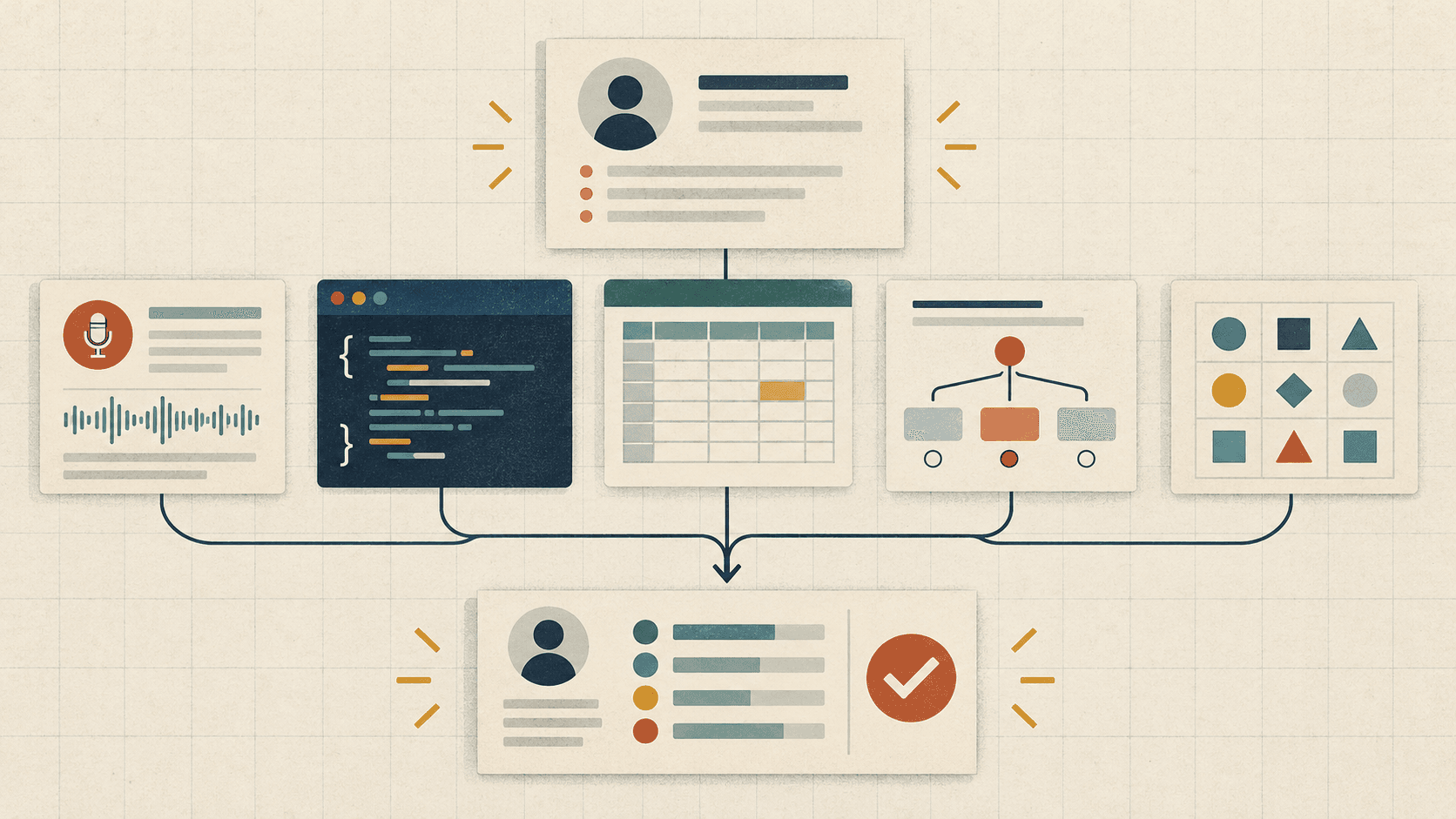
The best pre-employment assessment tool for a small business depends on the evidence the employer needs. HireMike suits periodic hiring that needs a structured first-round conversation without a subscription. TestTrick offers a broad assessment library at a comparatively low published annual price. Canditech and Vervoe focus on practical work, HackerRank specialises in technical hiring, and Criteria and Bryq cover cognitive and behavioural assessment.
A small business rarely needs the platform with the longest feature list. It needs a method that answers a specific hiring question without creating an expensive or frustrating process.
If you need evidence that a candidate can perform a practical task, use a skills test or work sample. If you need to evaluate technical ability, use a specialist coding platform. If your problem is conducting consistent first-round interviews without filling the calendar, a structured interview platform is more appropriate. Cognitive and personality assessments serve a different purpose and require more careful validation.
In brief:
- Choose the evidence before choosing the software.
- Compare the full annual commitment, not only the monthly number displayed on a pricing page.
- Use the shortest assessment capable of answering the hiring question.
- Keep a person responsible for interpreting the evidence and making the decision.
- Do not treat a vendor's claim that a test is fair, validated or predictive as proof for your particular role.
Best Pre-Employment Assessment Tools at a Glance
Prices and features were checked against vendors' published pages on 12 October 2026. Prices are in US dollars and exclude taxes, add-ons and negotiated terms.
HireMike publishes this article and is included in the comparison. We applied the same questions to every product and state where another type of assessment is more suitable. This is a research-based comparison of public product, pricing and help documentation. It does not claim that we ran a controlled hands-on test of every platform.
| Tool | Best for | Evidence collected | Published entry pricing | Main consideration |
|---|---|---|---|---|
| HireMike | Structured first-round screening for periodic hiring | Applications, CV evidence and conversational interview responses | No subscription; $0.50 per CV screen and $10 per completed interview | Not a coding, work-sample or psychometric testing platform |
| TestTrick | A low-cost general assessment library | Skills, cognitive, psychometric, situational, coding and video responses | $35/month equivalent, billed at $420 annually | Request technical evidence for every test you intend to use |
| Bryq | Combined skills, cognitive and personality profiles for very small teams | Skills, cognitive ability and personality indicators | $69/month equivalent for 1–15 employees, billed at $828 annually | Advanced reports and custom validation require higher-tier services |
| Criteria | Established aptitude and multi-method assessment | Cognitive, personality and skills measures | Quote required | Less purchasing transparency than a self-service skills test |
| TestGorilla | A broad skills library with a free starting point | Skills, qualifying questions, video responses and other tests depending on plan | Free tier; Core from $215/month billed annually | Simulations, integrations and several advanced features require Plus |
| Canditech | Realistic office tasks and job simulations | Spreadsheets, video, written answers, files, coding and role-specific exercises | Team from $150/month billed annually for 100 candidates | Two active assessments on Team; several technical features require Pro |
| Testlify | A large library with varied response formats | Skills, coding, simulations, video, audio and phone assessments | $139/month, billed at $1,668 annually for 100 credits | Credits expire, and integration pricing needs confirmation |
| HackerRank | Specialist developer assessment | Coding, database, project and live technical interview evidence | Starter $199 monthly or $1,990 annually | Excessive if coding is only a small part of the hiring process |
| Vervoe | Sophisticated work samples at greater hiring scale | Simulations, code, spreadsheets, files, presentations and recorded responses | Quote required | Current positioning is more enterprise-focused than occasional-SMB focused |
There is no meaningful overall winner across all nine categories. HireMike and HackerRank, for example, answer entirely different questions. One collects structured first-round evidence; the other examines technical work. The useful comparison is not which platform has more features, but which one produces the evidence your next decision requires.
What Is a Pre-Employment Assessment Tool?
A pre-employment assessment tool is software that collects structured evidence from candidates before a hiring decision. Depending on the platform, that evidence may come from skills questions, work samples, simulations, cognitive exercises, personality inventories, coding tasks or structured interviews.
Assessment software is not automatically more accurate than human judgement. Its value depends on whether the assessment is relevant to the work, administered consistently and interpreted properly. A polished dashboard cannot rescue an irrelevant test.
If you are still deciding what evidence the role requires rather than which product to purchase, begin with our candidate evaluation guide. It explains how to define job-related evidence before choosing a method or platform. This comparison assumes you understand the role and the uncertainty the assessment needs to resolve.
Choose the Evidence Before Choosing the Tool
The easiest way to buy the wrong assessment platform is to begin with a product demonstration. Most platforms look impressive in a demonstration because the vendor controls the example.
Begin with the uncertainty in your hiring decision instead.
| Question you need to answer | Suitable method | Relevant tools in this comparison |
|---|---|---|
| Can the candidate perform a defined part of the job? | Work sample or job simulation | Canditech, Vervoe, Testlify |
| Can the candidate write, debug or discuss production-relevant code? | Coding assessment and technical interview | HackerRank, TestTrick, TestGorilla, Testlify |
| Does the candidate possess a defined skill or body of knowledge? | Skills assessment | TestTrick, TestGorilla, Testlify, Canditech |
| How does the candidate reason through role-specific situations? | Situational-judgement exercise or structured interview | TestTrick, HireMike |
| How does the candidate communicate in a first-round conversation? | Structured conversational interview | HireMike |
| Is a cognitive or behavioural construct relevant to performance? | Appropriately supported specialist assessment | Criteria, Bryq |
| Do we simply have too many applications to review manually? | Application and screening workflow | HireMike or other candidate screening software |
Do not add an assessment merely because the software makes one easy to send. Every additional stage asks candidates to contribute time before receiving anything in return. The result should either change a real decision or remove uncertainty that matters.
This evidence-first approach is also the foundation of skill-based hiring for a small business. The objective is not to replace a CV with a different collection of scores. It is to collect evidence that is closer to the work.
How We Compared These Tools
We reviewed seven areas that matter to a small employer:
- The evidence produced. Does the tool measure a skill, collect a work sample, structure an interview or report a psychological construct?
- Job relevance. Can the assessment be connected to the actual requirements of the role?
- Real purchasing commitment. Is the advertised number a monthly payment, an annual contract, a credit allowance or a quote?
- Candidate effort. Can the employer control the length and avoid an unnecessarily demanding first stage?
- Setup and review work. How much effort is required to build the assessment and interpret the result?
- Transparency and control. Can the hiring manager inspect the evidence behind a score and retain the final decision?
- Accessibility and responsible use. Does the vendor explain accommodations, security, validity and the limits of automated scoring?
This is an editorial comparison of published information, not a validation study. Descriptions such as "science-backed", "validated", "fair" or "predictive" should be treated as vendor claims until you have reviewed the documentation for the exact assessment and intended use.
The same rule applies after a score is produced. A useful candidate evaluation process preserves the underlying evidence, applies a standard agreed in advance and makes the reason for the decision reviewable.
1. HireMike: Best for Structured First-Round Screening Without a Subscription
HireMike is designed for small employers whose main problem is not administering a test but finding the time to screen applications and conduct consistent first-round interviews.
The employer creates a role and defines its requirements. HireMike can suggest assessment criteria and interview questions, but the employer can edit, reweight or replace them before the role goes live. Candidates complete a custom application form and any mandatory knockout questions. HireMike then scores applications against the approved criteria, after which the employer decides who proceeds.
Selected applicants attend a browser-based conversational AI screening interview. The employer receives an overall score, a criteria-level breakdown, key highlights, a recording and a timestamped transcript. Scheduling and reminders are included.
That produces richer conversational evidence than a multiple-choice test while allowing the hiring manager to review what the candidate actually said instead of relying only on a score.
HireMike's published pricing has no setup charge, monthly fee, contract or minimum commitment. Application collection, job posting and knockout screening are free. AI CV screening costs $0.50 per application, and a completed AI screening interview costs $10.
For a narrower comparison of conversational, one-way and live video formats, use the guide to the best AI interview tools for small businesses.
Because HireMike publishes this article, its limitation should be explicit: it is not a general test library. It does not replace a coding exercise, spreadsheet simulation, trade test or validated cognitive or personality instrument. A business hiring a developer may use HireMike for structured first-round screening and a specialist platform for technical evidence.
Choose HireMike if you hire periodically, want a consistent first round and need reviewable evidence without paying for software during months when you are not recruiting.
Skip it as your primary assessment if the question can only be answered through a practical work sample, technical exercise or specialist psychometric instrument.
2. TestTrick: Best Low-Cost General Assessment Library in This Comparison
TestTrick publishes a library of more than 500 tests across role-specific skills, software skills, coding, cognitive ability, psychometric measures, situational judgement and language. It also supports custom questions, essays, files and recorded video responses.
Its main small-business advantage is the amount included at the entry price. The Starter plan costs $35 per month when billed as $420 annually. It includes 600 candidate-completion credits per year, three users, the library, custom assessments, published ATS integrations, proctoring and custom branding. Creating or sending an assessment does not consume a credit; one is used when a candidate completes it. Additional credits are listed at $2 each.
That gives a small team considerable capacity for a lower annual minimum than most products in this comparison. It is particularly relevant when one company hires across several departments and would otherwise need separate testing products.
Breadth is not the same as validity. Before using a cognitive, personality or situational assessment in a consequential decision, request the technical documentation for that specific test. Ask what it measures, how it was developed, what reliability evidence exists and whether the validation population resembles the people and jobs in your process.
Choose TestTrick if you want several assessment categories, predictable annual pricing and enough hiring activity to use a meaningful portion of 600 credits.
Skip it if your primary need is a conversational interview or you only expect to assess a handful of people and do not want an annual commitment.
3. Bryq: Best Combined Cognitive, Personality and Skills Profile for Tiny Teams
Bryq combines cognitive ability, behavioural traits and hard skills in one candidate profile. Its public materials also describe an AI job builder, role profiles and self-service integrations with several applicant tracking systems.
For companies with one to 15 employees, Bryq's pricing page displays an annual Pro commitment of $828, equivalent to $69 per month when paid annually. It includes unlimited invitations subject to fair-use terms. The same page displays a higher monthly option, so check the selected billing view carefully before purchasing.
Bryq is useful when an employer wants more than a standalone knowledge test but does not want to assemble separate cognitive, personality and skills products. The flat annual price can also be easier to budget than a per-candidate charge when hiring volume is steady.
There are important boundaries. Core candidate results are included in Pro, but advanced cognitive and personality analysis, custom assessments and Bryq's validated-hiring service are shown as Enterprise features or add-ons. Do not assume that every report or validation service shown in a demonstration is part of the entry plan.
Cognitive and personality assessments require careful interpretation. A favourable profile should not override missing job skills, and a less favourable one should not become an automatic rejection without evidence that the measured construct is relevant to the role.
Choose Bryq if your small team wants a combined profile and can justify an annual subscription.
Skip it if the role is best evaluated through a direct work sample, or if you need advanced validation support without moving beyond the entry plan.
4. Criteria: Best for Established Aptitude and Multi-Method Assessment
Criteria offers cognitive, personality and skills assessments, alongside other specialist measures. Its Criteria Assess package also advertises a test builder, template library, non-AI proctoring, branded candidate experiences, supported languages and standard integrations.
This is the strongest candidate in this comparison for a business that specifically wants established psychometric assessment and expects help choosing and interpreting it. Criteria also sells interview products and a combined suite.
The trade-off is purchasing simplicity. Criteria does not publish a dollar price for the Assess plan. Its small-business material describes a flat-fee subscription, but employers must request a quote. A very small business should compare that total commitment with the number of roles and candidates it actually expects to assess.
Request documentation for the particular instrument rather than accepting a general statement that the platform is validated. Validity belongs to an intended interpretation and use. An assessment supported for one role, population or decision is not automatically appropriate for every vacancy.
Choose Criteria if psychometric rigour, support and several established assessment types matter more than self-service purchasing.
Skip it if you need a simple, inexpensive work sample or want to calculate the complete cost without speaking to sales.
5. TestGorilla: Best Broad Skills Library With a Free Starting Point
TestGorilla is one of the better-known general assessment platforms. Its Core plan includes a library of more than 350 tests, custom questions, qualifying questions, resume scoring and two premium user roles. The library covers job skills as well as cognitive and personality categories.
Its free plan provides 10 credits per month, five essential tests with unlimited use and limited access to a larger group of tests. That makes it possible to inspect the workflow before making an annual commitment.
The current public price for Core begins at $215 per account per month when billed annually. TestGorilla's credit documentation lists 250 credits, with a standard skills assessment consuming one credit per candidate. Several capabilities a buyer might expect are reserved for Plus, which begins at $520 per month billed annually. Those include ATS and API integrations, job simulations, custom coding challenges, identity verification and the full AI-interview library.
The distinction between Core and Plus is important. A buyer who chooses TestGorilla because of a simulation, integration or advanced technical feature may discover that the relevant annual commitment is substantially higher than the headline Core price.
Choose TestGorilla if you want a recognisable, broad self-service library and have enough assessment volume to support the annual cost.
Skip it if you hire infrequently, need simulations or integrations at entry pricing, or want a simple pay-per-completion model.
6. Canditech: Best for Realistic Office Tasks and Job Simulations
Canditech focuses on job simulations and customisable assessments that resemble real work. Depending on the plan, employers can use written responses, files, video, Excel exercises, coding, SQL, front-end tasks and embedded Google Sheets questions.
That range is useful for roles where a conventional quiz would miss the point. A spreadsheet exercise for an analyst, an email response for customer support or a file-based assignment for a designer can reveal more than asking candidates to rate their own proficiency.
Canditech's Team plan is listed at $150 per month billed annually, or $1,800 for a year, based on 100 candidates. It includes two active assessments, eight users, more than 500 pre-built tests and several practical question formats. The Pro plan is listed at $200 per month billed annually and adds unlimited active assessments and users, ATS integrations, coding, front-end, SQL and embedded Google Sheets questions.
The main small-business constraint is not candidate volume alone. A company hiring for several positions at once may find the Team plan's limit of two active assessments restrictive. It should also confirm whether its required exercise format is available on Team or requires Pro.
Work samples can create candidate burden if they become unpaid projects. Keep the exercise short, use only the amount of work needed to observe the skill and avoid requesting something the business could use commercially.
Choose Canditech if realistic office or role simulations are central to the decision.
Skip it if you need many simultaneous assessments at the lowest tier or only require a simple first-round conversation.
7. Testlify: Best for a Large Library and Varied Assessment Formats
Testlify advertises more than 3,500 tests and 180,000 questions. Its platform supports role and software skills, cognitive assessments, language tests, coding, Microsoft Office and Google Workspace simulations, custom questions and several interview formats.
The Standard plan is listed at $139 per month, billed at $1,668 annually. It includes 100 yearly credits and three users. One credit is consumed when a candidate starts an assessment rather than when the candidate completes it. Unused credits expire at the end of the cycle. Additional seats are listed at $15 per month, while additional credits are listed at $21 each.
Those terms matter when candidates abandon an assessment. A started but incomplete attempt still consumes capacity, so a small business should make instructions, expected completion time and technical requirements clear before the candidate begins.
Testlify's pricing page also contains language that requires clarification: it promotes access to numerous ATS integrations, while its detailed comparison lists ATS integrations as a paid annual add-on on Standard. Ask the vendor to put the included integrations and complete annual charge in writing before signing.
The breadth is valuable, but it increases the importance of assessment design. Combining every available format can produce a long and incoherent candidate journey. Use only the sections that answer defined questions.
Choose Testlify if you hire across many kinds of roles and can use its simulation and response-format breadth.
Skip it if your annual volume is low, you are likely to lose credits through abandonment or you need inexpensive integrations.
8. HackerRank: Best Specialist Platform for Technical Hiring
HackerRank is the specialist option when the main question is whether a candidate can perform technical work. Its Screen and Interview products support coding, database and project questions, with more than 55 programming languages and live technical interview capabilities.
The Starter plan is published at $199 month to month or $1,990 annually. It includes one user and 120 attempts per year on annual billing. Pro is listed at $449 monthly or $4,490 annually, with unlimited users, 300 annual attempts, AI features and ATS integrations. Check the HackerRank purchasing FAQ for current overage terms and confirm which integrity controls are available on the selected plan.
For a software company hiring developers repeatedly, the depth may justify the commitment. A general assessment library that happens to contain a few coding questions is not always a substitute for a platform designed around executable code, databases, projects and collaborative technical interviews.
For a company hiring one developer this year, HackerRank may be more infrastructure than it needs. A smaller technical-testing product or a carefully designed work sample may be more proportionate.
Choose HackerRank if developer hiring is frequent and technical depth is central to the process.
Skip it if most vacancies are non-technical or you only need an occasional coding check.
9. Vervoe: Best for Sophisticated Work Samples at Scale
Vervoe is built around observing candidates perform job-related work. Its library contains more than 300 skills-based assessments, while custom assessments can include video, code, spreadsheets, multiple-choice responses, files and other interactive tasks.
The platform also advertises automated grading and ranking, score breakdowns, response playback, completion reporting, integrations and candidate feedback. This can be useful when a company wants a substantial skills-first workflow rather than a single test.
Vervoe currently positions its pricing and product towards enterprise and higher-volume hiring. It does not publish an entry dollar price; prospective customers must request a quote. That does not make it unsuitable for every small company, but it means an occasional employer should not assume it will be economical.
Automated grading should remain reviewable. When a model learns from examples or existing top performers, ask what characteristics it is learning, how its recommendations can be challenged and what happens when the model encounters a different kind of strong candidate.
SIOP's recommendations for AI-based assessments provide useful questions about predictive evidence, reliability, fairness, documentation and ongoing monitoring.
Choose Vervoe if you have meaningful hiring volume, need sophisticated job simulations and can support a sales-led implementation.
Skip it if you want transparent self-service pricing or only hire a few people each year.
What These Platforms Really Cost at Small-Business Volumes
The monthly number on a pricing card does not necessarily describe your cost. Some products require annual payment, some sell candidate credits, some charge only when an activity is completed, and others provide no public figure.
The table below applies published entry terms to 10, 50 and 100 completed candidates. It does not imply that the products collect equivalent evidence. Fixed-price rows show the cash commitment required even when only a fraction of the allowance is used.

| Tool | Published minimum or usage rule | 10 candidates | 50 candidates | 100 candidates |
|---|---|---|---|---|
| HireMike | $10 per completed AI interview | $100 | $500 | $1,000 |
| TestTrick | $420 annual Starter plan; 600 completion credits | $420 | $420 | $420 |
| Bryq | $828 annual Pro commitment for 1–15 employees | $828 | $828 | $828 |
| TestGorilla | Core from $2,580 annually; 250 credits | $2,580 | $2,580 | $2,580 |
| Canditech | Team $1,800 annually for 100 candidates | $1,800 | $1,800 | $1,800 |
| Testlify | Standard $1,668 annually for 100 credits | $1,668 | $1,668 | $1,668 |
| HackerRank | Starter $1,990 annually for 120 attempts | $1,990 | $1,990 | $1,990 |
| Criteria | Quote required | — | — | — |
| Vervoe | Quote required | — | — | — |
For HireMike, adding one CV screen for every person in the table would make the three totals $105, $525 and $1,050. In a normal workflow, however, the number interviewed should be smaller than the number of applications screened. TestGorilla's limited free plan may cover an initial 10-credit trial; its row shows the minimum public commitment for the paid Core plan.
This table reveals the central small-business trade-off. A fixed subscription becomes cheaper per candidate as volume rises, but the company still pays the full annual amount when volume is low. Usage-based pricing moves with activity but may cost more per person at sustained high volume.
Software price is only one part of the calculation. Add:
- Internal setup time
- Candidate support
- Hiring-manager review time
- Integration or branding charges
- Credit overages
- Credits that expire unused
- The cost of an assessment that produces no useful decision evidence
For an honest comparison, calculate the full annual commitment using your expected number of roles and candidates rather than the vendor's best-looking unit price.
Candidate Time Is a Cost Too
Comparable completion-time data was not publicly available for all nine products, and the same platform can be configured as a five-minute screen or a much longer assessment. It would therefore be misleading to assign one duration to each vendor.

Instead, ask for the typical completion time of the exact assessment you plan to use and confirm it during a pilot. Tell candidates the expected duration before they start. Measure completion and abandonment rather than assuming that an assessment is acceptable because it can be completed on a phone.
The wider candidate experience guide for small businesses explains how timing, communication and unnecessary steps shape whether qualified people remain in the process.
If an employer cannot explain which decision a question will influence, that question should probably be removed. The best candidate experience is not the assessment with the most polished animation. It is a relevant, proportionate process that respects the candidate's time.
How to Run a Useful Assessment Pilot
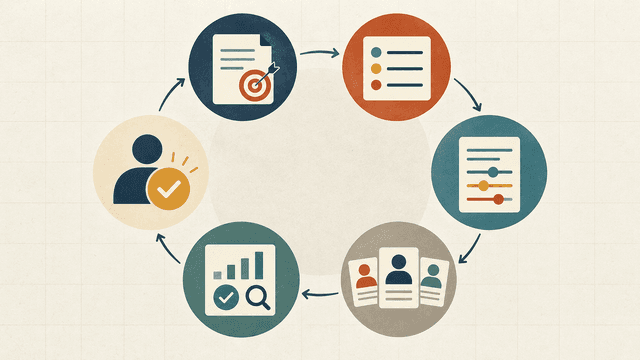
Do not begin by sending a new assessment to every applicant. Run a controlled pilot for one role.
First, define the decision the assessment is intended to improve. "We want more candidate data" is not specific enough. A useful goal is closer to: "Before scheduling a live interview, we need evidence that a customer-support candidate can diagnose an incomplete complaint and write a clear response."
Then define what a satisfactory answer looks like before reviewing candidates. An interview scorecard or work-sample rubric prevents the standard from shifting when a particularly likeable applicant appears.
Before purchasing, ask the vendor:
- What precise construct or skill does this assessment measure?
- What evidence supports its use for this role and decision?
- How long does a typical candidate take to complete it?
- What accommodation process and alternative format are available?
- Can reviewers inspect the evidence behind the score?
- What is the complete first-year cost at our actual volume?
- What happens to candidate data, recordings and results after the process ends?
During the pilot, track completion, abandonment, accommodation requests, score distribution, reviewer usefulness and whether the result changes the next decision. After hiring, compare the pre-hire evidence with a carefully defined quality-of-hire measure. A test that produces attractive reports but has no meaningful relationship to subsequent work is not adding value.
Avoid optimising only for a lower interview-to-hire ratio. A faster funnel is not better if it excludes capable people or advances candidates who cannot perform the work.
Responsible and Legally Defensible Use
Assessment software does not transfer responsibility from the employer to the vendor.
The EEOC's guidance on employment tests and selection procedures explains that a seemingly neutral procedure may create unlawful discrimination if it disproportionately excludes a protected group and is not job-related and consistent with business necessity. Employers should also consider an equally effective alternative with less adverse impact when one is available.
The APA and SIOP Principles for the Validation and Use of Personnel Selection Procedures make another important point: validity evidence must support the intended interpretation and use. Testimonials and promotional claims are not substitutes for technical evidence.
The US Office of Personnel Management's assessment guide recommends considering validity, reliability, subgroup differences, applicant reactions and cost. These are better buying questions than simply asking how many tests a platform contains.

Accessibility requires equal attention. ADA guidance on hiring technology warns that hiring software can screen out qualified people with disabilities if the tool is inaccessible or measures a disability rather than the relevant job skill. Employers need a clear accommodation route and, where necessary, an alternative assessment. Timed assessments should also be reviewed against relevant WCAG guidance.
In practice:
- Use criteria defined from the work
- Apply the same process consistently
- Provide a visible accommodation route
- Tell candidates how AI is involved
- Retain meaningful human review
- Record why the evidence affected the decision
- Monitor outcomes rather than assuming fairness
- Revisit the assessment when the job changes
For a wider implementation checklist, see the guide to fair hiring practices for small businesses. The article on what should stay human in automated hiring explains where automation should stop and accountable judgement should begin.
This section provides general information, not legal advice. Employment and data-protection requirements vary by jurisdiction and use case.
Where HireMike Fits in the Assessment Process
HireMike is most useful when the expensive part of the process is repetitive application review and first-round interviewing.
It can collect applications, apply mandatory knockout requirements, organise CV evidence against employer-approved criteria and conduct structured conversational screening interviews. The hiring manager then reviews the underlying application, criteria breakdown, interview recording and transcript before deciding who advances.
That does not eliminate human judgement. It places human judgement after the repetitive collection and organisation of evidence.
A sensible combined workflow might look like this:
- Use knockout questions for objective minimum requirements.
- Review structured CV evidence.
- Use HireMike for a consistent first-round conversation.
- Send a short work sample or specialist technical assessment only to candidates who reach the relevant stage.
- Conduct a human final interview using an agreed scorecard.
- Record the decision against the same job requirements.
This avoids asking every applicant to complete every possible assessment. It also keeps expensive or time-consuming exercises later in the funnel, where both employer and candidate have made a greater commitment.
If the central question is "Can this developer write the required code?", choose a technical platform. If it is "Can this analyst build the spreadsheet?", use a simulation. If it is "How can we give qualified applicants the same structured first round without spending days on calls?", review how HireMike works and calculate the role using usage-based pricing.
Frequently Asked Questions
What is the best pre-employment assessment tool for a small business?
It depends on what the business needs to learn. HireMike suits structured first-round screening without a subscription. TestTrick offers a low published entry price for a broad library. Canditech is stronger for office and job simulations, HackerRank specialises in technical hiring, and Criteria is more appropriate when established psychometric assessment is required.
How much does pre-employment assessment software cost?
Public entry prices in this comparison range from usage-based fees with no subscription to annual commitments of several thousand dollars. Quote-led products may cost more. Compare the full annual commitment, candidate allowance, add-ons and unused credits rather than the displayed monthly equivalent.
Are there free pre-employment assessment tools?
TestGorilla publishes a limited free assessment plan, while several other vendors offer trials. Free access is useful for inspecting the candidate and administrator experience, but it does not establish that a test is appropriate or valid for the hiring decision.
Are pre-employment assessments legal?
They can be, but employers remain responsible for job relevance, consistent administration, accommodations, privacy and monitoring for adverse impact. Requirements vary by jurisdiction. Obtain qualified legal advice for your locations and intended use.
Does every pre-employment test need to be validated?
The evidence required depends on what the assessment measures and how the score is used. The more consequential the interpretation, the stronger the supporting evidence should be. Ask for documentation relevant to the exact instrument, role, population and decision rather than accepting a general platform-level claim.
When should an assessment appear in the hiring process?
Place it at the earliest stage where its value exceeds its burden. Objective knockout questions can appear at application. Short, relevant screening may follow. Longer work samples and technical exercises usually belong after basic eligibility and interest have been established.
How long should a pre-employment assessment take?
There is no universal ideal duration. It should be only long enough to collect the evidence required. Measure actual completion and abandonment during a pilot, tell candidates the expected duration in advance and provide accommodation or an alternative where appropriate.
Can candidates cheat on online assessments?
Identity controls, question variation, proctoring and code playback can make misconduct easier to detect, but no control eliminates it. Use role-relevant exercises, ask candidates to explain important decisions later and avoid treating an automated integrity flag as proof without review.
Is an assessment platform the same as an ATS?
No. An applicant tracking system manages candidates, vacancies and workflow. An assessment platform collects evidence about candidates. Some assessment vendors integrate with an ATS, while others include limited candidate-management features. A small business should not pay for both unless each solves a real problem. The resume screening software guide explains another neighbouring category.
Can assessment software reduce bias?
A structured, job-related process can reduce some opportunities for inconsistent judgement. Software can also reproduce or introduce bias through unsuitable criteria, inaccessible design, historical training data or automated scoring. Consistency helps, but it is not a guarantee of fairness.
The Right Tool Should Make the Decision Clearer
The purpose of a pre-employment assessment is not to produce another score. It is to give the hiring team evidence that changes or strengthens a real decision.
For practical work, ask candidates to perform a bounded, relevant task. For technical roles, use an environment that can evaluate the required technical work. For cognitive or personality measures, demand appropriate professional evidence. For first-round communication and role-specific responses, use a structured interview process.
A small business benefits most when it collects the minimum evidence needed, understands what each result means and keeps the final decision accountable to a person.
Sources and Verification Notes
Product details and pricing were checked on 12 October 2026 using the official pages for HireMike, TestTrick, Bryq, Criteria, TestGorilla, Canditech, Testlify, HackerRank and Vervoe. Vendor pricing and features can change, so confirm current terms before purchasing.
Selection-practice guidance was checked against the EEOC, APA and SIOP selection principles, US Office of Personnel Management, ADA.gov and W3C timing guidance.
Product-performance and validation statements attributed to vendors have not been independently established by HireMike. No vendor claim should replace role-specific due diligence, appropriate professional advice or human review.