Candidate Screening Software for Small Businesses: What Actually Works in 2026
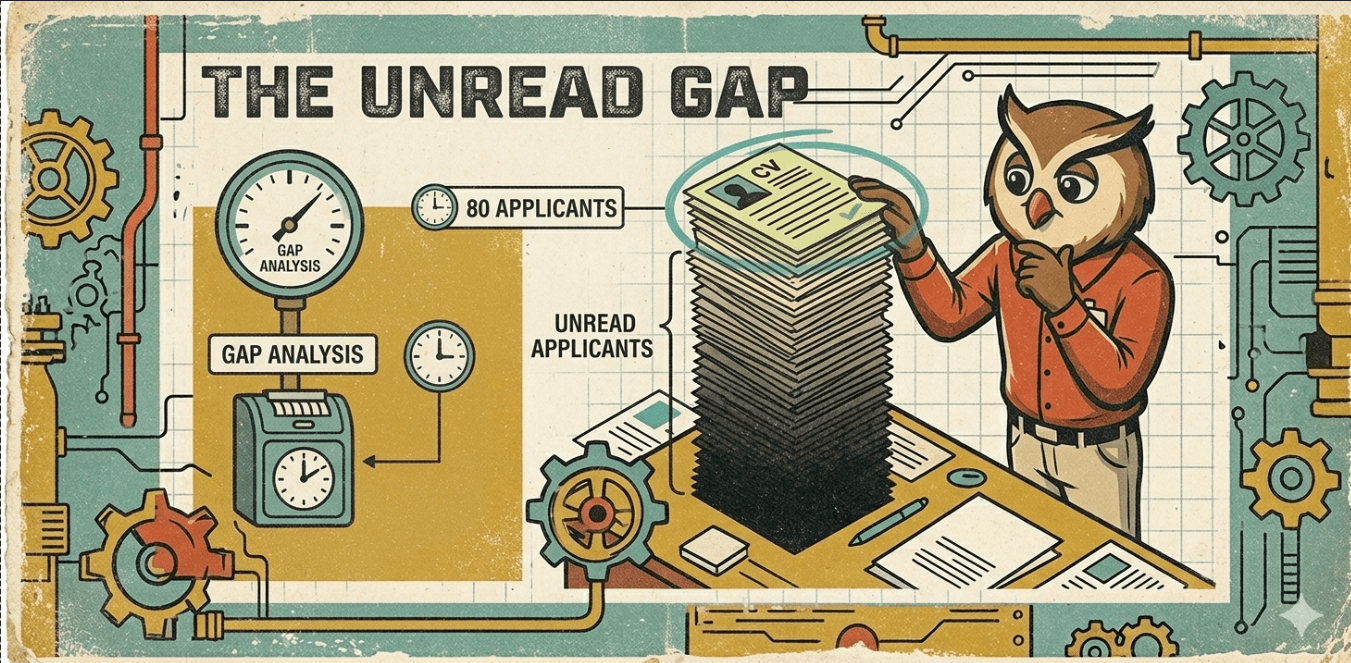
Post a job. Watch 80 applications arrive in 48 hours. Open the first ten resumes, maybe fifteen, and then your actual work pulls you back. The rest sit unread. You hire from the top of the pile, not the top of the pool.
At HireMike, we see this play out constantly across small businesses in hospitality, retail, professional services, and beyond. The problem is not a shortage of good candidates. It is a review capacity problem, and that is a far more solvable one, if the process is structured correctly.
This guide explains what candidate screening software actually does, which features matter for small teams, where the current tools fall short, and how to choose something that saves real time without costing more than the hire is worth.
For a practical process you can compare tools against, start with HireMike's hiring resource hub and the guide to screening applications against one scorecard.
What Is Candidate Screening Software?
Candidate screening software automates the review, scoring, and assessment of job applicants before a hiring manager gets involved. It parses incoming resumes, evaluates each one against a defined set of criteria, and ranks the full applicant pool, so you can make faster, more confident decisions about who actually deserves your time.
Modern platforms go further than basic resume parsing. The strongest ones combine AI match scoring, structured first-round video interviews, skills assessment, and automated scheduling into a single workflow. The result is a hiring process that reviews every applicant fairly, surfaces the best candidates (not just the first ones through the door) and hands control of every advancement decision back to you.
Why Candidate Screening Matters for Small Teams
Most small business owners do not lose good candidates because they made a bad decision. They lose them because they never got to them.
HireMike Insight Across the screening workflows we have processed, one pattern appears consistently: hiring managers without defined screening criteria spend a disproportionate amount of time reviewing candidates who do not meet the role's basic requirements, often at the expense of candidates who do. Defining your criteria before applications open is the single highest-leverage action you can take before a role goes live.
The cost of a poor hire is well-documented. The Society for Human Resource Management (SHRM) estimates that replacing an employee can cost between 50% and 200% of their annual salary once you account for lost productivity, onboarding, and training. Screening software reduces that risk by ensuring the people who reach your final interview have been evaluated consistently, against criteria that actually matter for the role.
How Candidate Screening Platforms Work
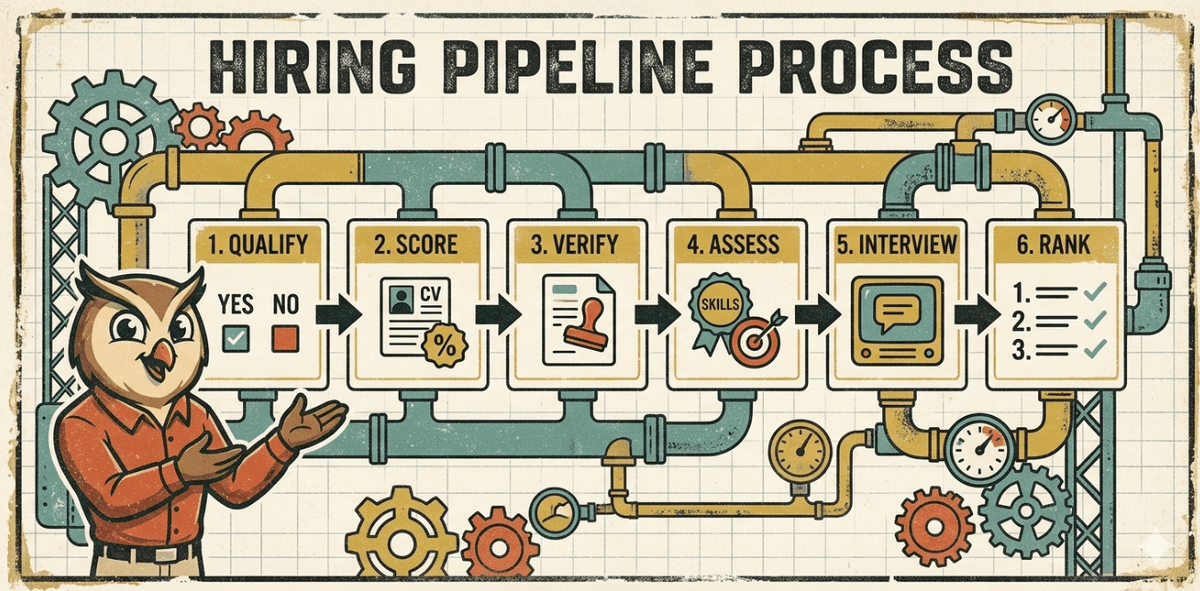
Understanding the workflow helps you judge whether a platform fits your process, or forces you to change it. Here is what a structured screening pipeline looks like in practice.
-
Qualification screening. Knockout questions at the application stage eliminate ineligible candidates automatically, wrong location, missing right to work, unavailable for required hours. This happens before any AI or human reviews a single CV.
-
Resume review and AI scoring. Every resume is parsed and scored against your defined criteria: work history, relevant experience, skills, role-specific requirements. Every applicant is reviewed, not just the first batch that arrived before your inbox got overwhelming.
For a closer look at that specific stage, the guide to resume screening software for small teams breaks down what to look for before you trust a tool with the first pass.
-
Eligibility verification. Structured questions confirm the basics that a CV does not always make clear.
-
Skills assessment. For roles requiring verifiable ability (technical, language, or role-specific) assessment tools validate competency before any interview time is committed.
-
First-round interview screening. AI conducts a structured video interview with each approved candidate: the same questions, the same conditions, consistently applied. Responses are scored and summarised in plain English.
-
Candidate ranking and advancement. The full applicant pool is ranked with clear summaries. You review the shortlist and decide who progresses. Every decision stays with you.
HireMike Insight We have observed that businesses achieve significantly more consistent hiring outcomes when all six stages are defined before the role goes live, not built reactively as applications start arriving. The businesses that struggle most with screening are those that treat it as something to figure out after the inbox fills up.
The Features That Actually Matter
Not all screening platforms are equal. When evaluating your options, these are the capabilities worth scrutinising.
AI match scoring calibrated to your role, not a generic template. The weighting should reflect what you actually care about: years of relevant experience, specific skills, location, availability. A tool that scores every role the same way is not really screening, it is sorting.
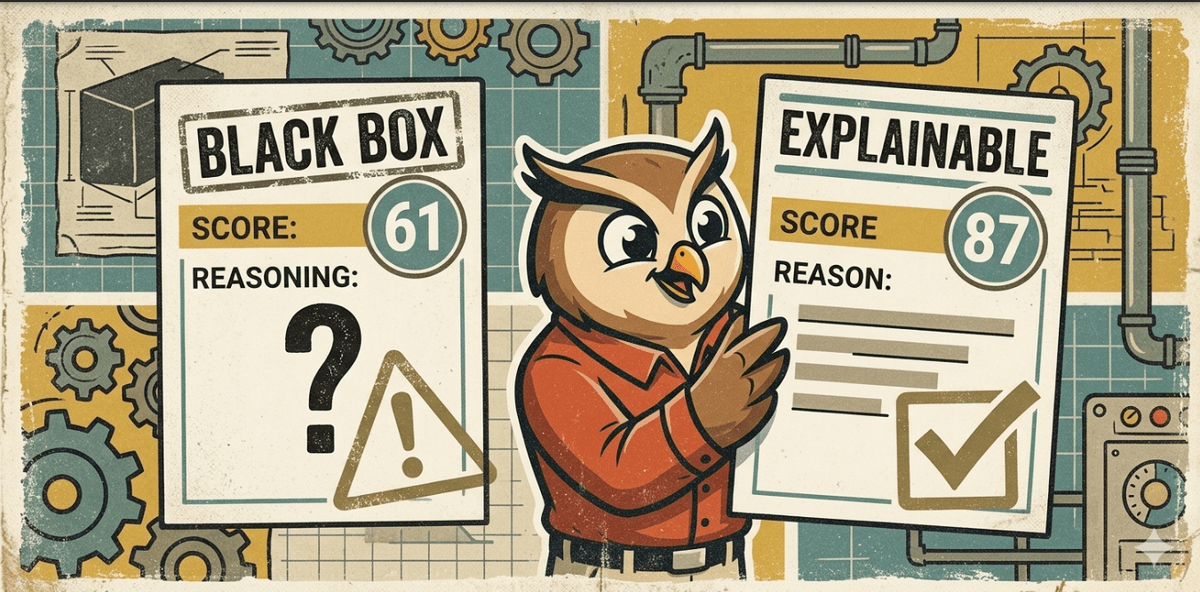
Explainable scoring. Black-box filtering, where candidates are screened out without visible reasoning, is both a legal risk and a quality risk. The Chartered Institute of Personnel and Development (CIPD) recommends that organisations using automated screening maintain clear documentation of how decisions are made. You should be able to see exactly why a candidate scored 87 versus 61. If you cannot, find a different tool.
Bias auditing. The algorithm should evaluate candidates on merit and job-relevant criteria, not demographic signals. The Equal Employment Opportunity Commission (EEOC) is explicit: automated screening tools must comply with the same anti-discrimination standards as human hiring decisions. Responsible platforms build this in as a baseline, not a premium add-on.
Structured video interviews. AI-led first-round interviews allow every shortlisted candidate to answer the same questions under the same conditions, producing assessments that are consistent and genuinely comparable. This is materially different from unstructured phone screens, which are highly susceptible to interviewer bias and difficult to evaluate across candidates.
Usage-based pricing. Most enterprise vendors do not offer this, and it is the feature that matters most to small businesses. Paying per CV screened and per interview completed means your cost scales with your actual hiring activity, not a flat monthly subscription that runs whether you are hiring or not. This is why HireMike pricing is tied to the screening work you actually use.
What Screening Software Actually Delivers
The benefits are real, but worth stating precisely.
Candidate screening platforms can meaningfully improve hiring efficiency and consistency. They are not a substitute for human judgment, they are a mechanism for ensuring that human judgment is applied to the right candidates, with all the relevant information available.
In practice, well-implemented screening consistently produces four outcomes:
Reduced time-to-hire. Automated CV review and AI-led first-round interviews eliminate the manual bottleneck that typically accounts for 60–70% of total hiring time.
Broader candidate review. In our experience, most small business owners review fewer than half their applications before making a decision. Screening software ensures the full pool is evaluated, which improves the quality of the eventual hire.
Consistent evaluation. Every candidate is assessed against the same criteria, in the same sequence, with the same questions. This removes the variability that comes from reviewing resumes across multiple sittings or conducting interviews in different moods and levels of attention.
Better candidate experience. Structured, timely communication, acknowledgements, interview invitations, scheduling confirmations, signals professionalism to applicants even at small-business scale. This matters more than most hiring managers expect.
HireMike Insight We regularly see small businesses underestimate how much the screening experience affects their ability to attract quality applicants in future hires. Word travels. A respectful, well-run screening process is a quiet but durable employer branding tool, and a chaotic one is the opposite.
Where Screening Software Falls Short
Recognising the limitations of these tools is as important as understanding their benefits.
Poorly defined criteria produce poorly calibrated rankings. Screening software can score every applicant, but if the scoring criteria are vague or misaligned with the role, the rankings will be too. The tool is only as good as what you put into it.
Over-reliance on automation is its own risk. Screening platforms should complement human hiring decisions, not replace them. The final interview, reference check, and offer decision remain fundamentally human activities. AI should be treated as a well-informed first opinion, not a verdict.
Inconsistent criteria across roles are hard to learn from. Businesses that use different screening criteria for the same role type across multiple hires produce data that is difficult to act on over time. Standardising criteria by role category, even informally, improves both consistency and the insight you can draw from it.
Automation can feel impersonal if implemented poorly. The best platforms balance efficiency with communication, ensuring candidates feel considered throughout the process rather than processed. At the screening stage, that distinction matters.
Candidate Screening Software vs Applicant Tracking System
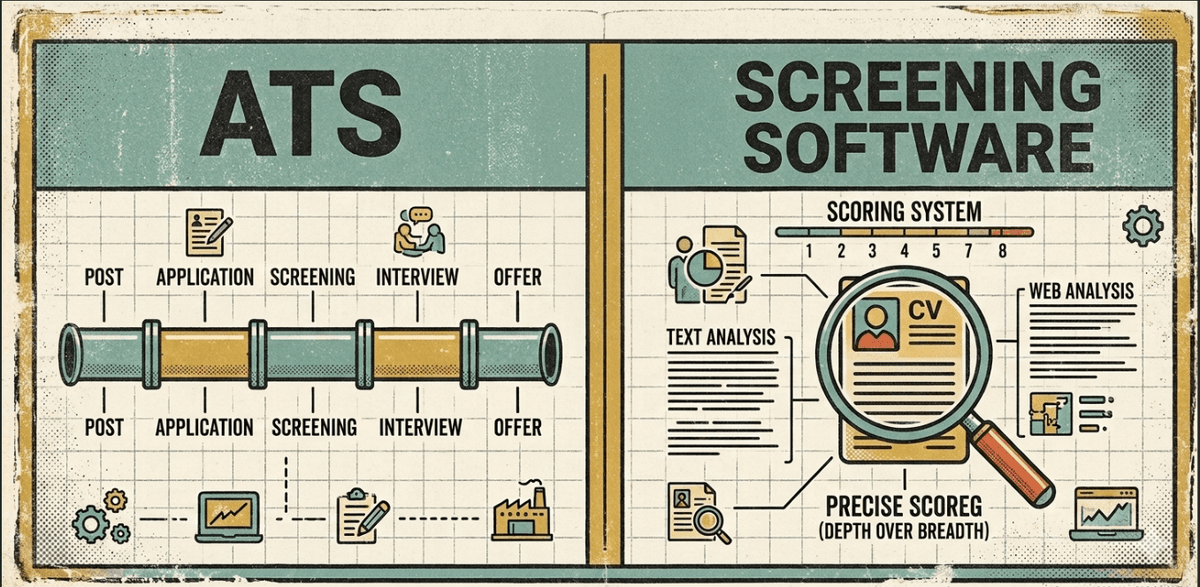
This is one of the most commonly searched distinctions in recruitment technology, and it is worth answering clearly.
An applicant tracking system (ATS) is the broader platform that manages the full recruitment pipeline, from job posting through to offer letter. It tracks every candidate, every communication, and every stage of the process. An ATS is fundamentally an organisational and workflow tool.
Candidate screening software handles the early-stage evaluation and ranking of applicants specifically. Its job is to help you decide who is worth your time, before you commit that time.
Many modern platforms combine both functions. But not all ATSs include intelligent screening, and not all screening tools include full ATS functionality. For small businesses, a tool that does screening exceptionally well is usually more valuable than a comprehensive ATS that does everything adequately.
How AI Is Changing Candidate Screening
AI has shifted candidate screening from a keyword-matching exercise to a genuinely evaluative one. Earlier tools scanned resumes for exact phrase matches, a crude method easily gamed by candidates who knew the keywords. Modern AI screening evaluates contextual fit, infers transferable skills, and assesses structured interview responses against role-specific competency frameworks.
That said, AI screening is only as good as the criteria it is given. Organisations should audit their screening criteria regularly, verifying that qualified candidates are not being filtered out unintentionally, and that the AI's recommendations align with the outcomes of hires made over time.
How HireMike Works for Small Teams
HireMike is a candidate screening platform built specifically for small businesses. Not adapted from an enterprise product. Not a feature buried inside a broader HR suite. Built from the ground up for businesses that hire occasionally, want to hire well, and cannot afford to spend 20 hours doing it.
Every resume in your applicant pool is scored against your criteria within minutes of submission. You define the weighting, we do the review. Candidates you approve are invited to a structured AI video interview: consistent questions, transparent scoring, plain-English summaries. You see the full ranked pool with every decision in your hands.
The pricing reflects how small businesses actually hire. Account creation, job posting, and application collection are free. You pay $0.50 per CV screened and $10 per completed AI interview. A typical hire, 80 applicants, 15 first-round interviews, costs around $190 total and saves an estimated 20 hours of review time.
No monthly contract. No annual commitment. No features you will never use.
Frequently Asked Questions
What is the difference between an ATS and candidate screening software? An ATS manages the full recruitment pipeline from posting to offer. Candidate screening software focuses specifically on evaluating and ranking applicants in the early stages. Many modern tools combine both, but the functions are distinct, and not every platform does both well.
Which candidate screening tools are free to start? Most platforms offer a limited free tier. Job posting and application collection are typically free. AI screening and video interviews are paid functions, though usage-based tools mean you only pay when you activate screening on a role, no subscription required to get started.
Is AI screening software reliable for small businesses? Yes, when the tool was built for small-team hiring volumes. The requirements that matter: usage-based pricing, transparent scoring, no monthly contracts, and an interface simple enough to operate without a dedicated HR function.
What are the most important features in a candidate screening platform? AI match scoring, explainable candidate rankings, structured video interviewing, bias auditing, and automated scheduling have the highest impact on hiring efficiency and quality. For small businesses, usage-based pricing belongs on that list too.
How does AI screening handle hiring bias? Responsible platforms build bias auditing into their scoring models, evaluating candidates on job-relevant criteria rather than demographic data. The EEOC requires that automated screening tools meet the same anti-discrimination standards as human decision-making. Always verify that the platform you use can show you how its scoring criteria are constructed and audited.
The Bottom Line

The right candidate screening tool reviews more applicants, in less time, with consistent criteria, and keeps you in control of every decision that matters.
For small businesses specifically, that means usage-based pricing, explainable scoring, and a process simple enough to run without an HR team. Not a six-month implementation. Not a contract. Not a platform built for someone else's problems.
The best hire you make this year might be sitting at number 47 in your applicant pool. A structured screening process is how you get there.