Skill-Based Hiring: The Small Business Answer to the AI Application Flood
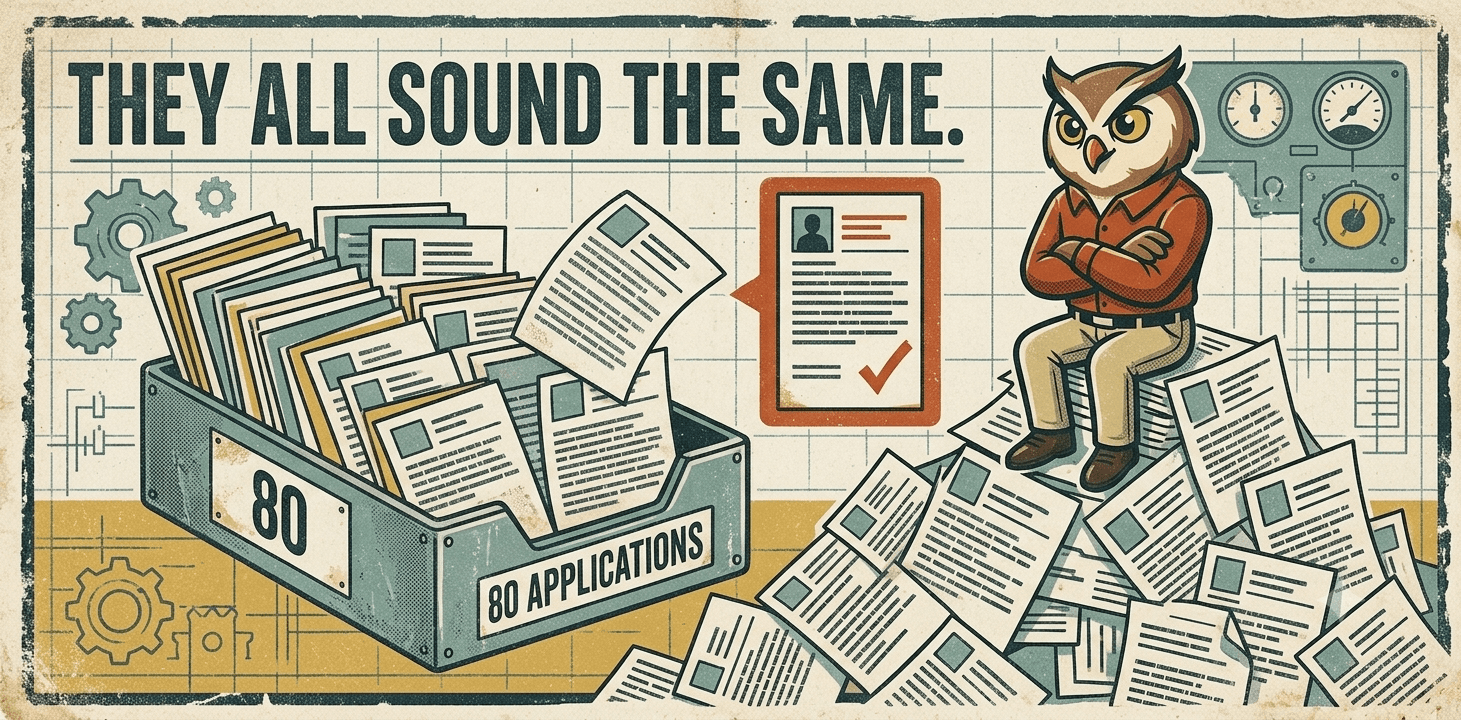
Something shifted in hiring over the past eighteen months, and most small business owners felt it before they had words for it. You post a role. Eighty applications arrive in 48 hours. You open the first ten, then the first twenty, and somewhere around application fifteen you notice something: they all sound the same. The language is polished. The competency claims are confident. The cover letters are specific to your job description in a way that suggests genuine research, except the next one says almost exactly the same thing. And the one after that.
This is not a coincidence. According to Robert Half, 67% of HR leaders say reviewing AI-generated applications has slowed their hiring process. For small businesses specifically, 54% report that AI-generated applications have made hiring harder. The signals that used to help narrow an applicant pool, including the quality of the writing, the specificity of the cover letter, and the structure of the CV, have been degraded by AI tools that produce all of them fluently, at scale, without the underlying competency they were designed to surface.
Skill-based hiring is the practical response to this problem. Not because it is a progressive HR philosophy, and not because it requires a formal assessment centre or a team of specialists to implement. Because it moves evaluation to the one place AI cannot reach on a candidate's behalf: the live, structured, competency-based assessment that happens in real time.
What Skill-Based Hiring Is
Skill-based hiring is a recruitment approach that evaluates candidates on demonstrated competencies and practical abilities rather than on degrees, job titles, or credentials. Instead of filtering applicants by where they studied or what their most recent job title was, it asks a simpler question: can this person actually do what the role requires?
The concept is not new. What is new is why it has become urgent. Skill-based hiring has been advocated for years as a fairer, more accurate predictor of job performance than credential-based screening. The research has consistently supported that case. But for most small businesses, the shift was theoretical: a best practice to aspire to rather than an immediate operational need. The AI application flood has changed that.
When the documents candidates submit can be generated at volume with minimal effort, evaluating candidates on those documents produces results that are increasingly unreliable. Skill-based hiring does not try to detect or filter out AI-assisted applications. It renders them irrelevant because what it evaluates cannot be produced by AI on a candidate's behalf.
Why the Traditional Approach Is No Longer Enough
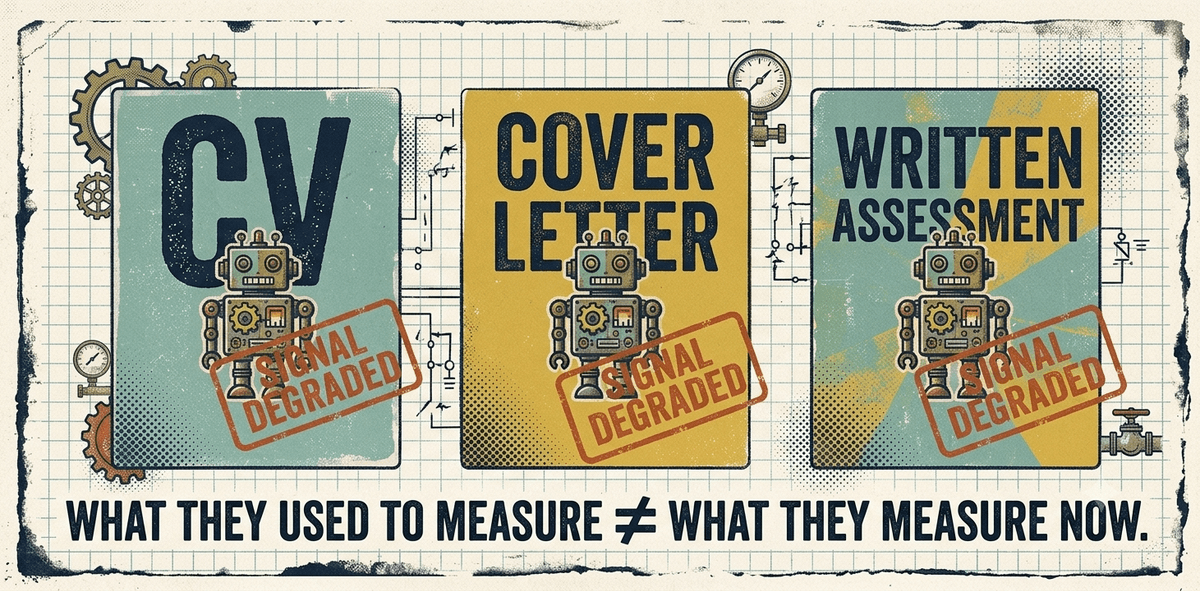
The conventional hiring process relies on a stack of signals that were each designed to surface a specific kind of information about a candidate. A CV shows work history and career progression. A cover letter demonstrates communication ability and genuine motivation. A written assessment tests applied knowledge. Together, they were supposed to give a hiring manager a picture of who the candidate actually is before any live interaction.
Each of those signals has been compromised by AI assistance, not because candidates are necessarily being dishonest, but because AI has made it trivially easy to produce polished, specific, well-structured versions of all of them. A cover letter that used to represent fifteen minutes of genuine effort and signal real motivation now represents thirty seconds and a prompt. A written response that demonstrated a candidate's own reasoning now reflects the model's reasoning as much as the candidate's.
The problem is not AI use itself. The problem is that evaluation methods built for a world where those documents were harder to produce are now measuring something different from what they were designed to measure.
HireMike Insight
The businesses struggling most with the AI application flood are the ones still relying on documents to make the hiring decision. The businesses adapting fastest are the ones that have moved evaluation to the live stage: structured questions, competency scoring, consistent criteria applied to every candidate in the pool. The shift is not from AI to no-AI. It is from evaluating what candidates submit to evaluating what they demonstrate.
How Skill-Based Hiring Works for a Small Business
The formal version of skill-based hiring, with job task analyses, competency mapping workshops, and multi-stage assessment centres, was designed for organisations with HR teams to run it. A small business hiring one person without specialist support needs a version that can be implemented before the next role goes live. Here is what that looks like in practice.
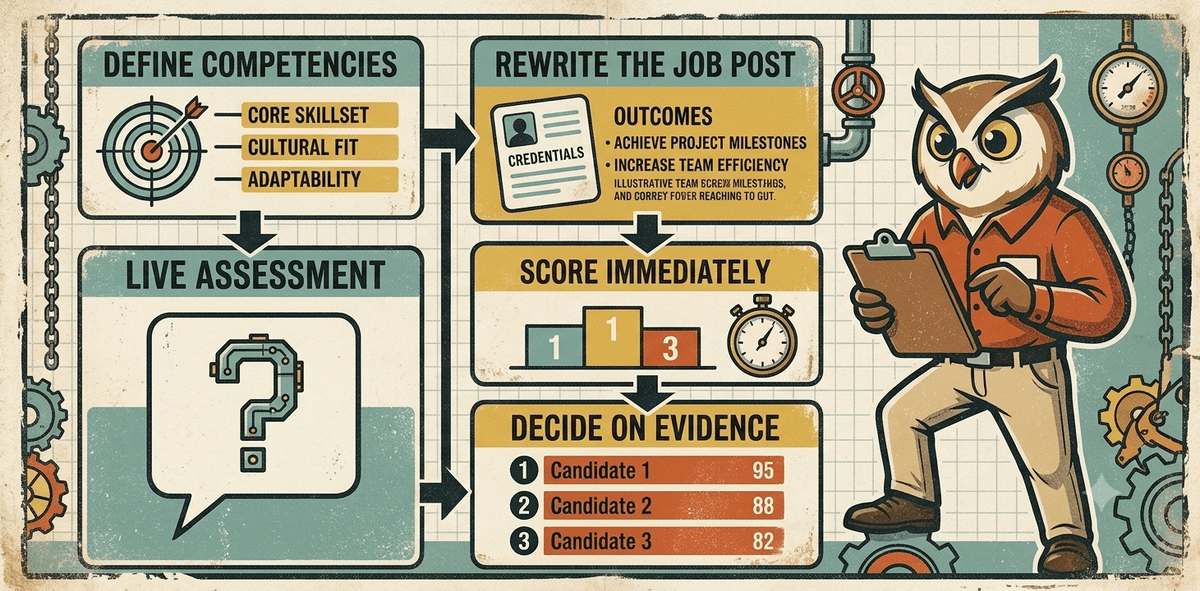
Define what the role actually requires. Start with competencies, not credentials. What does this person need to be able to do in their first 90 days? Not what would be impressive on their CV. What are the three to five things they must demonstrate to be worth hiring? Write each competency as a concrete capability. "Manages multiple deadlines without dropping tasks" is a competency. "Organised" is a label. The former tells you what to look for and what to ask about. The latter does not. This step takes thirty minutes and determines the quality of everything that follows.
Rewrite the job post around outcomes, not credentials. A job post that lists "degree required" or "five years of experience" is screening for proxies: signals that correlate with capability but do not measure it directly. A job post that describes the actual work, such as "you will manage our social media calendar, respond to customer enquiries within 24 hours, and prepare weekly reports for the management team," attracts candidates who recognise the role from their own experience and self-select more honestly. Include the salary range. Candidates who cannot accept your offer will not apply, and every application you do not receive from the wrong person is time you do not spend declining them.
Move evaluation to the live stage. This is the core shift. Instead of making the CV and cover letter the primary filter, design two or three structured interview questions that require candidates to demonstrate the competencies you defined in step one. Competency-based questions ask for specific past experience rather than general statements: "Tell me about a time when you had to manage competing priorities under pressure. What did you do, and what was the outcome?" A candidate with genuine relevant experience answers this specifically. A candidate without it either struggles or produces an answer that stays general, which is exactly what AI generates most fluently. Specific, contextual, first-person experience is the hardest thing to fake convincingly in a live conversation, and it is what skill-based interview questions are designed to surface. Ask the same questions of every candidate, in the same order. The value of a structured question is not the question itself; it is the comparability of the answers across your full candidate pool.
Score every candidate immediately after each interview. Complete your scoring before the next interview, not at the end of the week. Memory of how an interview felt degrades quickly and is significantly more susceptible to bias than a structured record made while the conversation is fresh. A simple 1–3 scale applied to each competency is enough; the precision of the number matters less than the consistency with which it is applied.
Make the decision on demonstrated evidence. At the end of the process, you have comparable, structured evidence about every candidate who reached the interview stage, not a set of impressions formed across different conversations on different days. The hiring decision becomes a comparison between data points rather than a competition between fading memories.
HireMike Insight
Skill-based hiring does not mean ignoring CVs entirely. It means treating them as one input among several rather than the primary filter. A CV shaped by AI still tells you something about a candidate's career history; it just no longer reliably tells you about their communication ability, attention to detail, or genuine motivation for applying. The structured interview fills that gap. The combination of both, with CV as background context and live assessment as the actual evaluation, produces a more complete picture than either alone.
What Skill-Based Hiring Actually Produces
The benefits are real, but worth stating precisely rather than as aspirational claims.
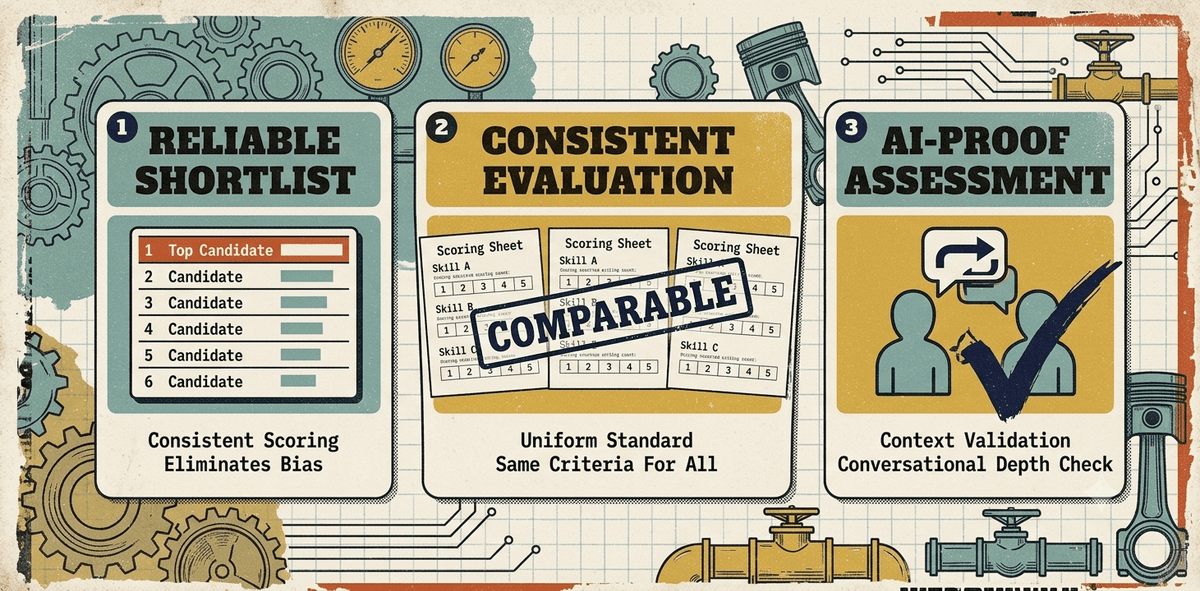
A shortlist built on demonstrated competency is more reliable than one built on document quality. The candidate who wrote the most compelling cover letter is not necessarily the strongest candidate; they may simply be the one who used AI most effectively, or who happened to be a strong writer with weaker practical skills. A shortlist built on structured interview performance filters for the thing that actually predicts job success.
Consistent evaluation produces better comparisons. When every candidate is asked the same questions and scored against the same criteria, the comparison at shortlisting stage is between comparable data points. The candidate at the top of the list got there because they demonstrated the most relevant capability, not because they interviewed most recently or on a day when the hiring manager had more patience.
Skills-based assessment is a natural defence against AI-assisted applications, not because it detects them, but because it evaluates something they cannot produce. A live, adaptive, structured interview asking for specific past examples and following up on vague answers is not a format AI coaching tools can navigate as effectively as they can polish a CV. The evaluation moves to terrain where genuine experience and real-time thinking are the decisive factors.
What Skill-Based Hiring Is Not
For a small business, skill-based hiring is not a three-hour work sample test that puts candidates off before they have spoken to anyone. It is not a formal assessment centre. It is not a specialist psychometric tool that requires licensing and training to administer.
It is a structured set of competency-based questions, defined before the first interview, applied consistently to every candidate and scored immediately after each conversation. That is the minimum viable version. It does not require an HR team, a specialist platform, or a significant investment of time; it requires thirty minutes of preparation and the discipline to use the same process for every candidate rather than letting each conversation wander wherever it naturally goes.
The formal version can come later, if the business grows to a point where it makes sense. The minimum viable version is available to any small business owner who wants to hire better before their next role closes.
How HireMike Supports Skill-Based Hiring
HireMike is built around the core principle of skill-based hiring: what a candidate demonstrates under structured assessment conditions is more reliable evidence of their capability than what they submit in a document. Its structured AI interviews ask every candidate the same competency-based questions, under the same conditions, and score their responses against criteria the hiring manager defines before the process opens.
The output is a ranked shortlist built on demonstrated competency, not CV quality, not cover letter polish, not which applications arrived before the inbox got overwhelming. Every advancement decision stays with the hiring manager. HireMike surfaces the evidence; the human makes the call.
For a small business owner facing eighty applications that all sound the same, that shift from evaluating what candidates submit to evaluating what they demonstrate is the practical answer the AI application flood actually calls for.
The Practical Reframe
Skill-based hiring is not a new idea. What is new is the problem it solves most directly. The AI application flood has not made hiring impossible. It has made the old approach to hiring less reliable than it used to be: filtering primarily on CV quality, cover letter specificity, and written assessment polish.
The documents that used to help are still worth reading. They are just no longer sufficient on their own. The small businesses that adapt their evaluation process, moving from document review to live competency assessment and from credential screening to structured evidence, will find that the strong candidates are still there. They were always there. They are just harder to identify from a polished CV alone, which was never as reliable a signal as it appeared.
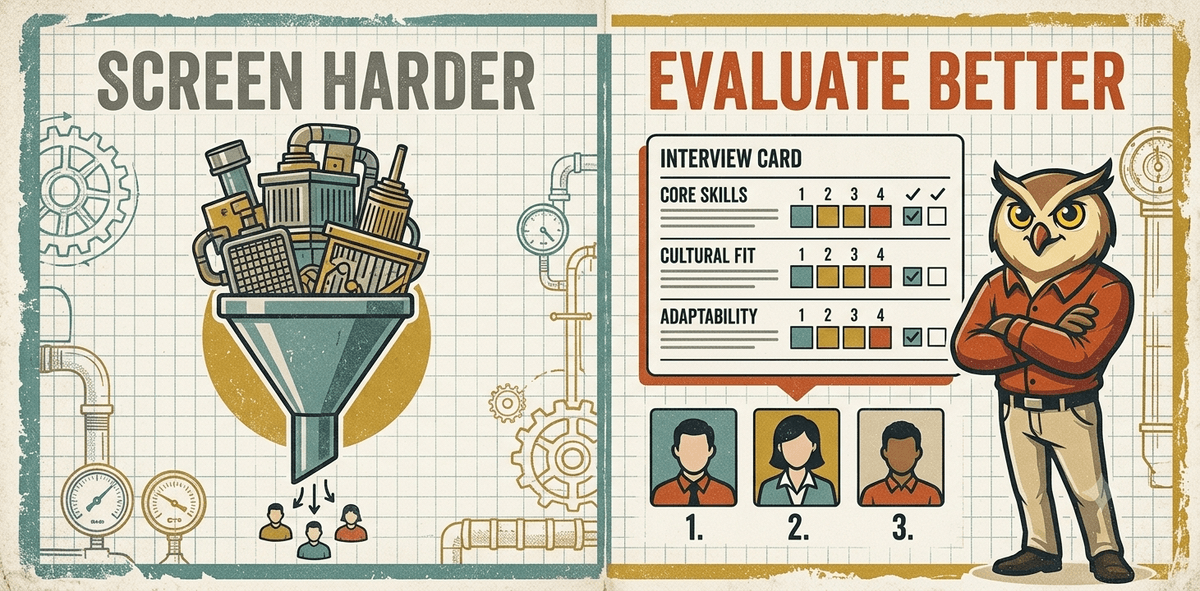
The answer is not to screen harder. It is to evaluate better.