Why Most Applicant Tracking Systems Are Built for the Wrong Business
Most small business owners who search for an applicant tracking system end up buying software designed for a company ten times their size. The features are impressive. The pricing page has three tiers. The onboarding checklist has fourteen steps. And six months later, half the features are untouched and the hiring process feels exactly as chaotic as it did before.
This is not a software problem. It is a mismatch problem. The ATS market was built for HR teams. Most small businesses do not have one.
Understanding what an applicant tracking system actually does — and what a business with five to thirty employees genuinely needs from one — changes which tools belong on your shortlist, and which ones do not.
If you are already comparing products, the ATS guide for small businesses covers current plan details, buying criteria, and cost-per-hire calculations.
What an Applicant Tracking System Actually Does
Strip away the marketing language and an ATS does four things:
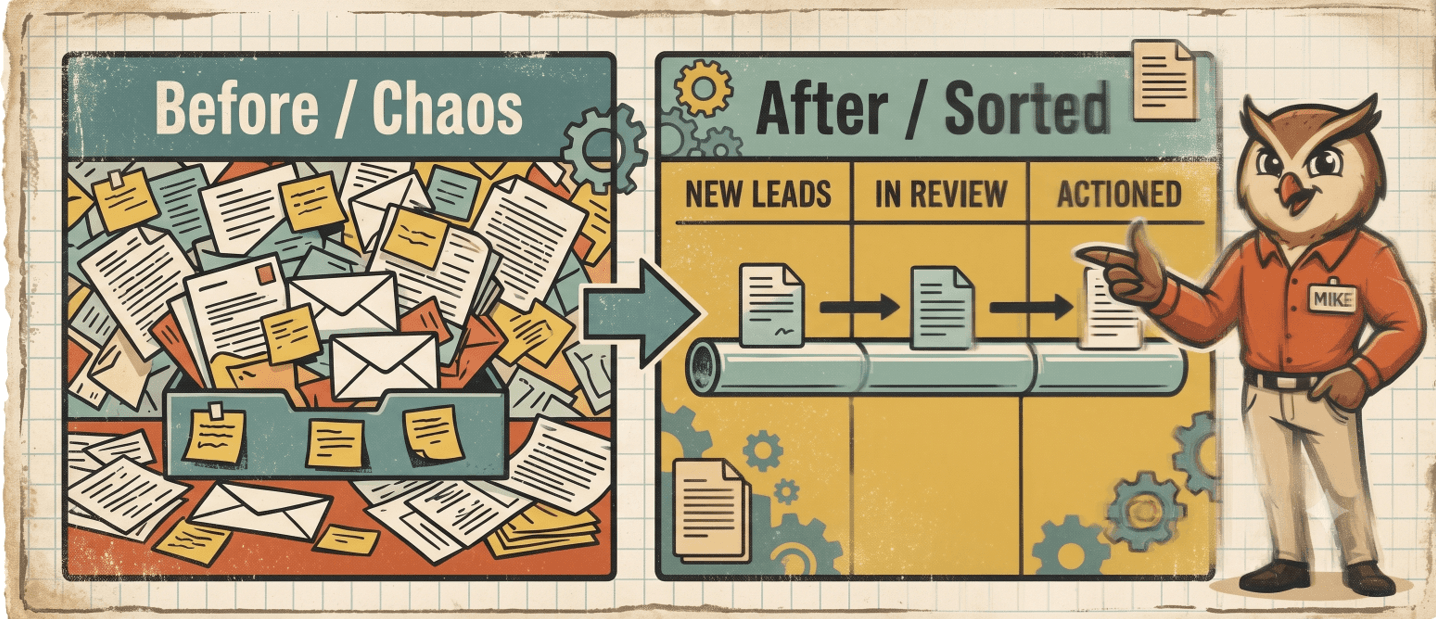
It collects applications in one place instead of spreading them across your inbox, your calendar, and a spreadsheet you started in good faith and abandoned by week two.
It organises candidates so you can see who is at what stage, who you have contacted, and who is waiting on you — without reconstructing the timeline from memory every time you open your email.
It structures the review process so that every candidate is evaluated against the same criteria, in the same order, rather than on whatever impression they happened to make in a twenty-minute phone call.
It handles the admin — scheduling, status updates, interview reminders — so that the back-and-forth that currently eats your Tuesday morning happens automatically instead.
That is the complete list. Every other feature — advanced analytics, DEI reporting dashboards, HRIS integrations, career site builders, offer letter workflows — is enterprise infrastructure layered on top of that core. Useful if you have an HR team operating a system at scale. A distraction if you are a business owner who needs to hire a shift supervisor before the end of the month.
The Problem Most Small Businesses Actually Have
HireMike Insight
We have processed enough small business hiring workflows to identify a pattern that rarely gets named directly: the candidate quality problem most owners think they have is usually a review capacity problem in disguise.
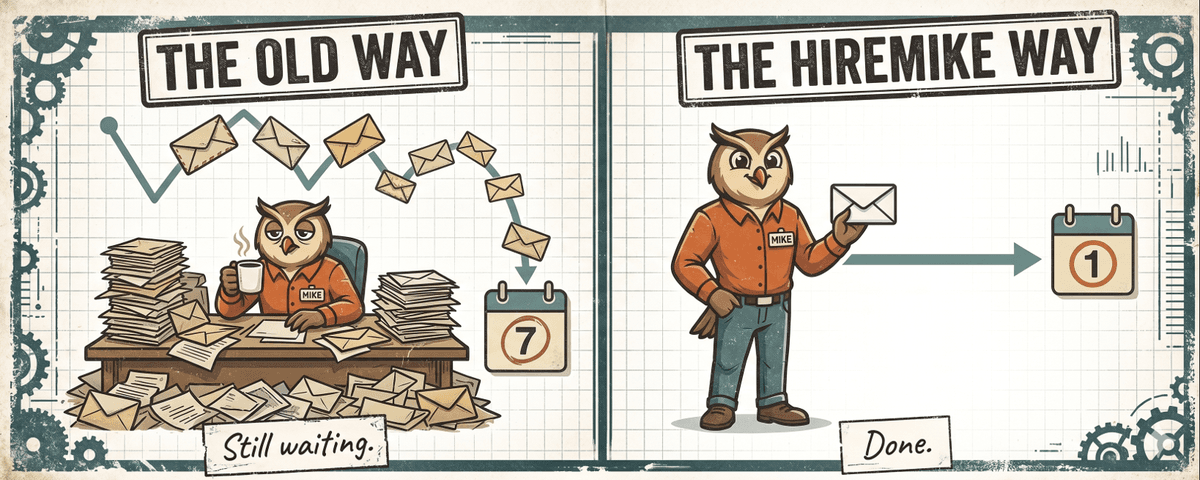
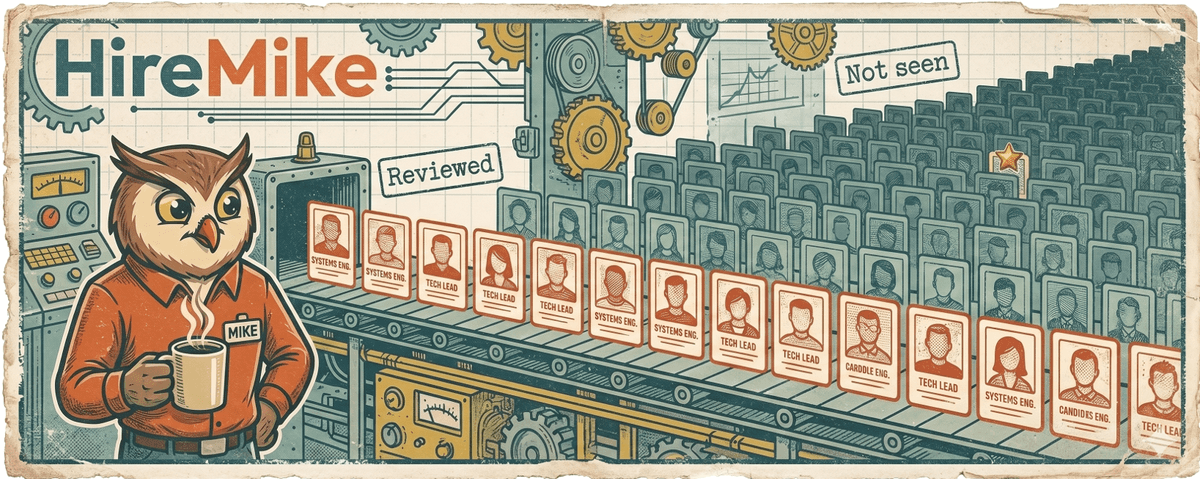
When a role receives 60 or 80 applications and the hiring manager reviews the first 15 before getting pulled back into running the business, the shortlist reflects who applied earliest — not who was most qualified. The best candidate in that pool may never have been seen at all.
This distinction matters because it changes what you are actually shopping for. If the problem is review capacity, you do not need a fourteen-feature ATS with a six-week implementation. You need a system that makes it possible — and fast — to screen a full pool of candidates consistently, surface the strongest ones, and hand the shortlist to whoever is making the decision.
Most ATS tools are built around the assumption that the person using them has time to use them. A small business owner does not. That assumption is where the mismatch begins.
What Small Businesses Are Sold vs What They Need
The ATS market is not short of options. What it is short of is options designed around the specific constraints of a business without a dedicated recruiter. Here is the gap in plain terms.
What enterprise ATS tools are built for: A structured HR function with multiple stakeholders, defined approval workflows, high-volume hiring across multiple roles simultaneously, compliance reporting requirements, and staff whose primary job is managing the system.
What a small business actually needs: A way to post a role, collect applications without losing any, review every candidate against consistent criteria, identify the strongest three to five, and schedule the conversations — without any of that taking more than a few hours of the hiring manager's time per week.
Those are different products. The fact that they share a category name is the source of most small business ATS disappointment.
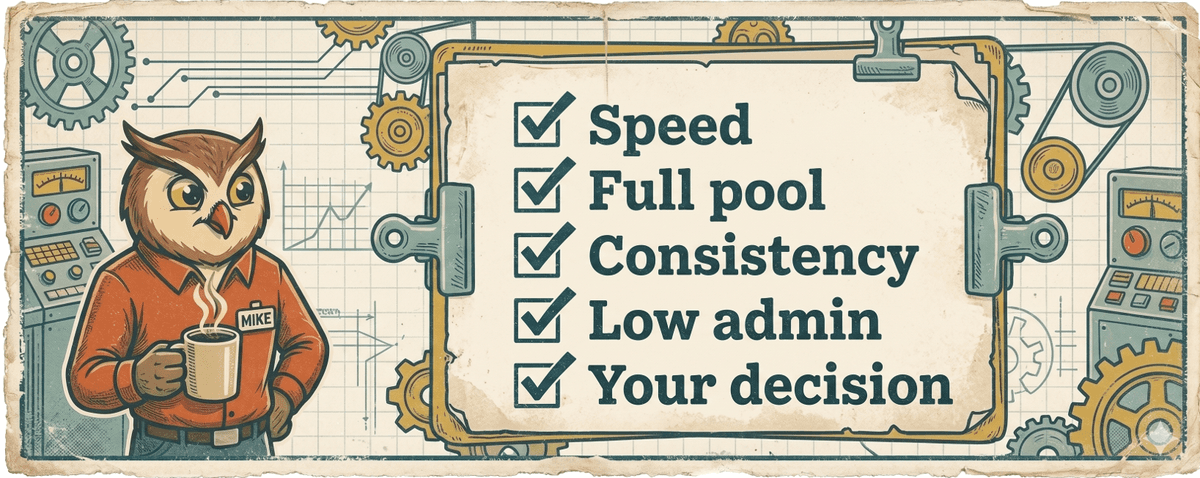
Five Things That Actually Matter for a Small Business Hiring System
When evaluating any tool in this space, these are the criteria worth measuring against. Everything else is secondary.
1. Time to first use
How quickly can you post a live role and start receiving applications? If the answer involves a setup call, a configuration period, or a multi-step onboarding flow, the tool was designed for someone with implementation bandwidth. A small business needs to be operational in under an hour.
2. Full-pool screening, not first-mover bias
The system should make it structurally easy to assess every applicant — not just the ones who arrived first. This means automated initial screening against defined criteria, not an inbox that rewards whoever clicks fastest.
3. Structured, consistent evaluation
Can every candidate be assessed against the same questions in the same format? Consistency is not a nice-to-have. It is what makes a shortlist defensible — and what makes the final decision easier. When candidates are evaluated differently, the comparison at the end is not apples to apples. It is memory versus memory.
HireMike Insight
Across the structured hiring workflows we have processed, one pattern holds consistently: hiring managers who use standardised scoring make faster final decisions and report higher confidence in their choice. The hesitation that characterises a difficult hire is almost always a data problem — not enough comparable information to distinguish between two candidates who both felt fine in conversation.
4. Low admin overhead
Scheduling, reminders, status updates — these should happen without manual effort from the hiring manager. If the system creates admin rather than eliminating it, it has failed at its primary job.
5. Human decision-making at every stage
The tool should surface information and structure the process. Every advancement decision — who moves forward, who is declined, who gets the offer — should rest with the person running the business. An ATS that makes recommendations is useful. One that makes decisions is a liability.
How Most ATS Recommendations Get This Wrong
The dominant format for ATS advice online is the ranked list: ten tools, brief feature summaries, a pricing column, a verdict. These lists are useful reference material. They are not useful buying guides for a small business, because they apply the same evaluation framework to tools built for fundamentally different buyers.
Greenhouse is an excellent product. It is built for a company with a dedicated recruiting function and the infrastructure to support one. Recommending it to a ten-person business alongside tools designed for that exact context — and letting the reader figure out the difference — is not analysis. It is a list.
The question a small business owner needs answered is not "which ATS is best?" It is "which approach to hiring structure is right for a business at my scale, with my resources, hiring at my pace?" Those are different questions. Most content in this space answers the first and ignores the second.
Where HireMike Fits
HireMike is not a traditional ATS. It is built specifically for the small business hiring problem as it actually exists — not as enterprise software describes it.
The workflow is straightforward: post a role, let HireMike handle structured CV screening and first-round interviews against criteria you set, receive a ranked shortlist of your strongest candidates, and make the decision. Scheduling, scoring, and ranking happen automatically. Every advancement decision stays with you.
The practical outcome is that a hiring manager who would otherwise spend fifteen to twenty hours on a single hire — posting, filtering, emailing, scheduling, comparing notes — spends a fraction of that time and makes a better-informed decision at the end of it.
It is not the right tool for a business running ten simultaneous roles with a dedicated HR function managing the pipeline. It is the right tool for the business owner who is hiring between the other thirty things they are managing this month.
What to Do Differently Starting Today
If your current hiring process runs through your inbox and a spreadsheet, the first change worth making is structural, not technological: define what you are screening for before you open the first application.
What are the three to five criteria that would make a candidate clearly qualified for this role? Write them down. Weight them if you can. Apply them to every candidate before any other judgment comes into play.
That structure — applied consistently, before impressions form — is what separates a shortlist from a guess. The right tool makes applying it automatic. But the thinking behind it has to come from you.
Once that structure exists, the case for a system that enforces it at scale becomes obvious. The time you spend on hiring should be the time you spend deciding — not the time you spend sifting.
If you want to see how that plays out in practice, read our guide on screening resumes without losing hours to it.