The Camera Never Asked a Follow-Up Question
The candidate looks directly into the camera.
“Tell us about a time you solved a difficult problem,” a recorded voice says.
She describes an unhappy customer, a project that was running late and a decision that apparently rescued the account. It sounds impressive. She speaks confidently. Her answer is well structured. She finishes with a measurable result.
Then the screen changes.
“Thank you. Here is your next question.”
But the most important part of the story was never explained.
What decision did she actually make? Was it hers to make? Did she rescue the account herself, or was she describing the work of an entire team as though it were her own? What did the customer say? What would she do differently today?
A curious interviewer would have noticed the gap. A good interviewer would have asked about it.
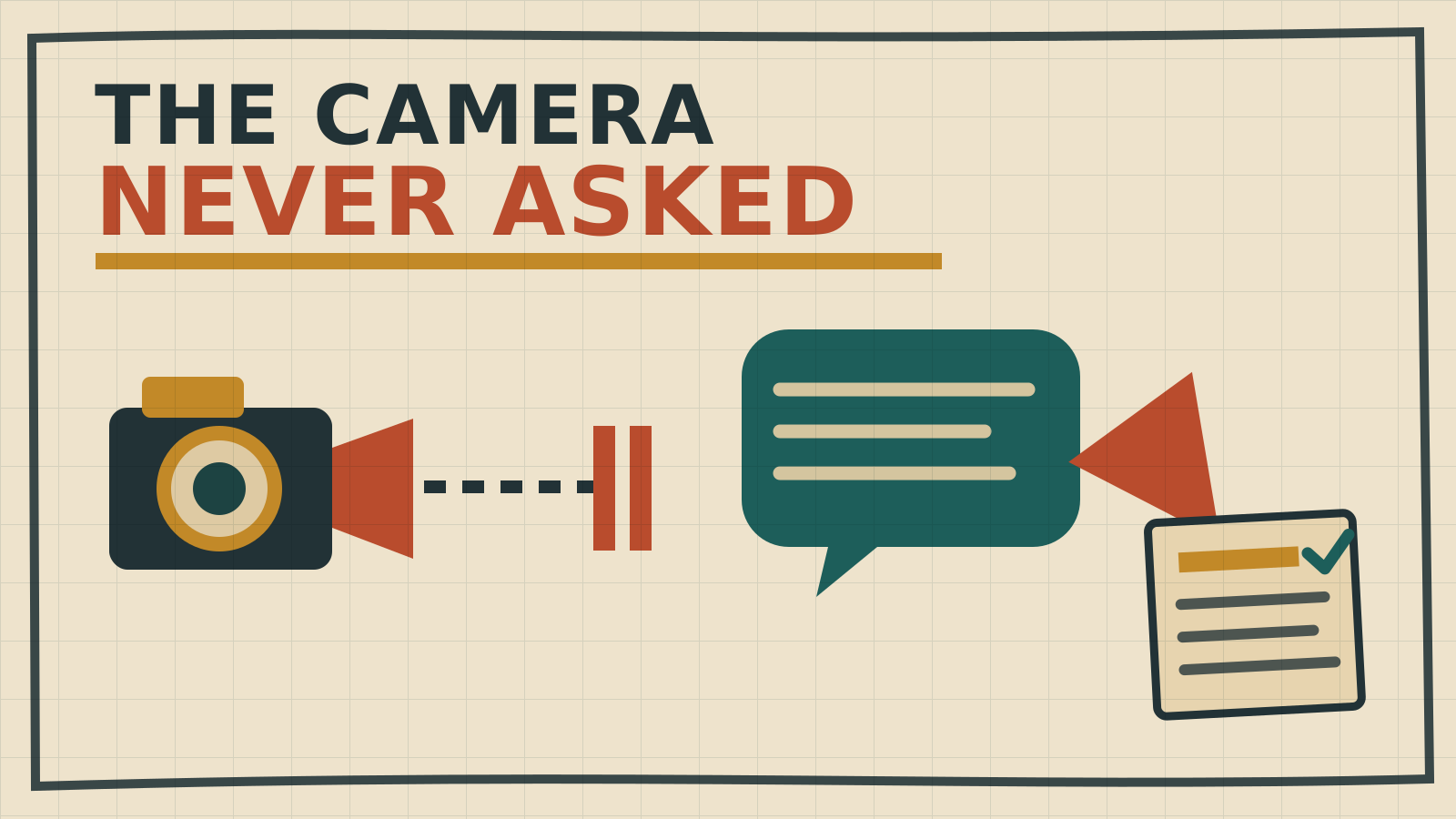
The camera simply recorded what it was given.
That is the difference hidden inside the debate about an AI interview vs a one-way video interview. The two formats are often grouped together because both place technology between the employer and the candidate. Both can happen without a recruiter being present. Both can help a company avoid the scheduling burden of repeated screening calls.
But they do not perform the same function.
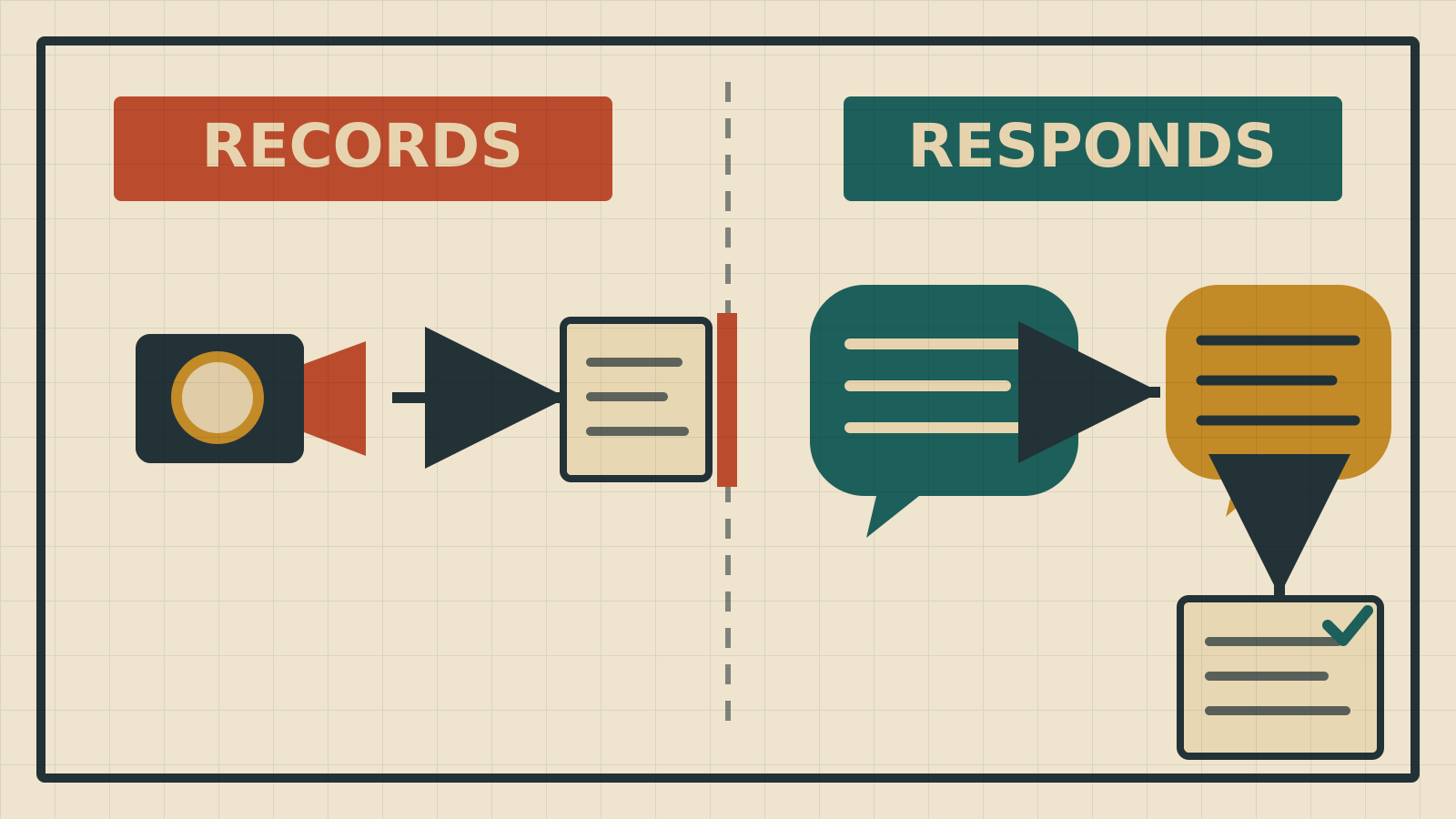
A one-way video interview captures a candidate's response to a fixed set of questions. A conversational AI interview can respond to the substance of that answer, ask for clarification and continue until the employer has something more useful than a polished first impression.
One records an answer.
The other can investigate it.
That distinction is the reason HireMike exists.
We Have Stretched the Word “Interview” Too Far
The word interview suggests an exchange. Someone asks. Someone answers. The answer changes what happens next.
If a candidate says something unexpected, the interviewer becomes curious. If the candidate makes a broad claim, the interviewer asks for an example. If an answer is unclear, the interviewer gives the candidate an opportunity to explain.
That movement is what separates an interview from a questionnaire.
A one-way video interview does not move. Its questions have already been chosen. The candidate may be articulate, hesitant, specific, evasive or surprising, but the system follows the same path regardless. Once one answer ends, the next predetermined question begins.
There are situations in which this is perfectly adequate. An employer may only want a short introduction, confirmation of availability or a simple explanation of why the candidate is interested in the role. A recording can collect that information without requiring the employer and candidate to find space in both calendars.
The problem begins when a recording tool is expected to do the work of an interviewer.
Imagine asking a sales candidate to describe the largest deal they have closed. The candidate says:
“I developed the relationship, handled the objections and helped close a contract worth more than $200,000.”
That answer contains several promising claims, but it does not yet reveal much about the candidate's ability. What did “developed the relationship” involve? Which objections did the customer raise? What did the candidate personally contribute? Was the contract new business, a renewal or the result of an existing relationship? What nearly caused the deal to fail?
Without those details, the employer is not assessing sales ability. The employer is assessing who can provide the most convincing summary of it.
A useful follow-up might ask:
“What was the most serious objection the customer raised, and what did you say or do in response?”
Now the candidate has to move beyond the headline. The employer begins to see how the person thinks, what they remember and whether their claimed experience can withstand examination.
This is how HireMike approaches AI-powered interviews. The system begins with structured, job-related questions, but it is not limited to playing them one after another. It can identify where an answer needs more detail and ask a relevant follow-up. The resulting evidence is then made available to the employer, who remains responsible for deciding what it means and what should happen next.
HireMike does not make the camera more intelligent. It changes the experience from a recording session into a structured conversation.
The First Answer Is Often the Least Interesting One
Candidates know how hiring works. They know which phrases sound persuasive. They know that employers value leadership, initiative, resilience and communication. Generative AI has made it even easier to shape experience into smooth, professional language.
None of that necessarily makes the candidate dishonest. People naturally prepare for important conversations. A candidate who has done excellent work may still need help expressing it clearly.
But a polished answer and a proven ability are not the same thing.
The first answer usually presents the version of the story the candidate has prepared. The follow-up is where the employer begins to discover the person behind it.
“Tell me about a time you dealt with conflict” may produce a carefully rehearsed story. “What did you say to the other person when they disagreed?” is harder to answer with a slogan.
“Tell me about a process you improved” may produce a broad achievement. “How did you know the new process was working?” requires evidence.
“Tell me about a difficult customer” may produce a story in which the candidate handled everything perfectly. “What part of the situation would you handle differently now?” creates room for judgment, humility and reflection.
This is not about catching candidates out. It is about giving them a better opportunity to demonstrate what they can do.
A brief or unclear first answer does not always indicate a weak candidate. Some people need a more precise question before they understand what evidence the employer wants. Others become nervous when speaking to a camera. Some candidates are excellent operators but inexperienced interviewees.
A fixed recording preserves those disadvantages. A relevant follow-up can reduce them.
Consider the difference:
“I improved our customer support process and reduced response times.”
That sounds positive, but it is too broad to assess.
A conversational interviewer could ask:
“What part of the process did you personally change, and how did the team measure the result?”
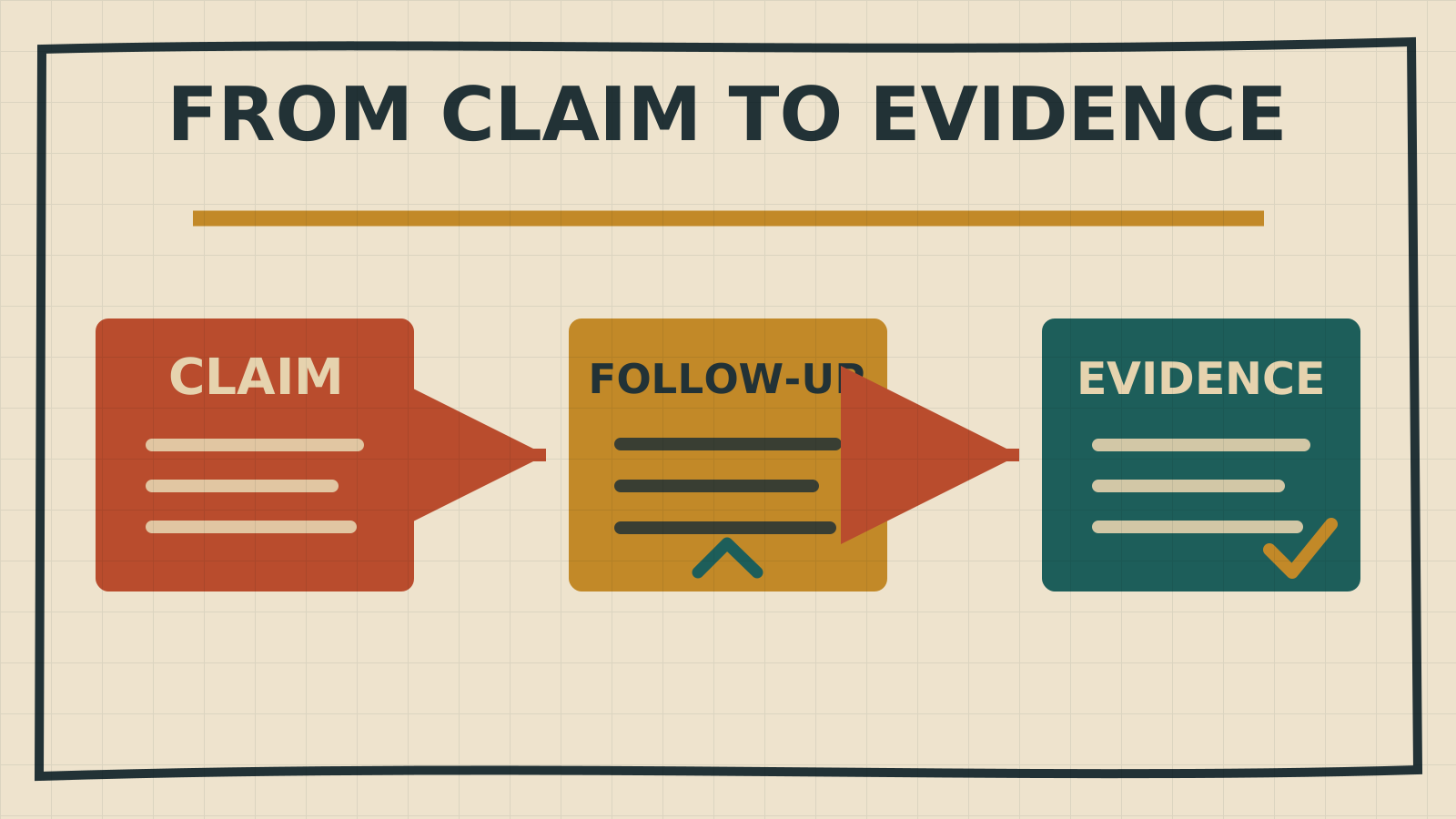
The candidate might then explain that support requests were being assigned manually, that high-priority tickets were regularly buried and that they created new routing rules. They might add that median first-response time fell from 19 hours to seven over the following two months.
The first response was a claim. The second produced evidence.
That is the product value at the centre of HireMike. It is not merely that more interviews can happen. It is that the employer can receive better-developed answers without personally repeating the same first-round conversation throughout the week.
For a small company, that distinction matters. The owner or hiring manager may not have a recruitment department. Their alternative to using technology is often not an hour-long conversation with every applicant. It is scanning CVs between meetings, interviewing a small shortlist and rejecting everyone else before hearing them speak.
HireMike allows the business to extend a structured first-round opportunity to more candidates, then review what those candidates actually said before deciding whom to meet.
Candidates Do Not Hate Technology. They Hate Disappearing Into It
One-way video interviews are efficient for employers. That is partly why they became popular.
A company can invite dozens of candidates without coordinating dozens of calls. Candidates can respond outside conventional office hours. Recruiters can review the recordings when their schedules allow.
Research on asynchronous video interviews has recognised benefits including flexibility, standardisation and reduced scheduling pressure. The same research also records concerns about impersonality, fairness, technical barriers and the absence of interaction. Those competing effects are explored in this peer-reviewed study of asynchronous video interviews.
The efficiency is real. So is the discomfort.
A candidate may spend an evening preparing examples, choosing appropriate clothes, clearing a quiet space and testing a camera. They sit alone, watching a countdown before each answer. They try to sound natural while speaking to a screen that gives nothing back.
Then they submit the recording.
They do not know whether anyone will watch it to the end. They cannot tell whether the employer understood their point. They cannot clarify an awkward answer. They cannot ask what success in the role would look like. Frequently, they do not know when—or whether—they will hear from the company again.
The process asks the candidate to perform the social labour of an interview while removing the employer from the interaction.
That is why the frustration is often described in moral language. Candidates do not merely call one-way video inconvenient. They call it disrespectful, lazy or dehumanising. The technology has become a symbol of the power imbalance already present in hiring.
A conversational AI interview does not magically remove that imbalance. Nor should employers pretend that talking to software is equivalent to meeting a future manager.
But responsiveness changes the nature of the exchange.
When a candidate's answer affects the next question, the system demonstrates that the content of the answer matters. When the employer later receives a transcript and organised evidence, the candidate's effort can become part of an accountable decision rather than disappearing into an unexplained score.
That is a more defensible use of automation.
A good candidate experience does not require hiding the fact that AI is involved. It requires telling candidates what the technology is doing, respecting the time they invest and ensuring that a person remains responsible for the result.
Fairness Is Not the Same as Asking Everyone Identical Questions
Supporters of one-way video interviews often make a reasonable argument: every candidate receives precisely the same questions, so every candidate is treated consistently.
The problem is that consistency of procedure does not automatically produce consistency of evidence.
Suppose two candidates are asked to describe a workplace disagreement.
The first explains the disagreement, the interests of the people involved, the action they took and the eventual outcome.
The second says:
“A colleague and I had different opinions, so we discussed the issue and found a compromise.”
The second answer may be vague because the candidate lacks experience. It may also be vague because the question was too broad, the candidate was nervous or they misunderstood which part of the story mattered.
A human interviewer would ordinarily ask, “What was the disagreement about?” or “What did the compromise involve?”
A fixed system cannot make that distinction. It records the incomplete answer and proceeds.
Fairness should not mean refusing to ask an obvious question because the previous candidate did not need it. It should mean that both candidates are given a meaningful opportunity to demonstrate the same job-related ability.
The US Office of Personnel Management's guidance on structured interviews reflects this distinction. A structured interview can use consistent lead questions and assessment criteria while still allowing controlled probes to obtain clearer information.
The criteria should remain stable. The conversation does not have to become mechanical.
HireMike applies this principle by separating the question from the competency being assessed. Candidates can receive the same core question and be evaluated against the same job-related standard, while follow-ups help clarify the individual evidence each person provides.
This is one of the most important differences between a conversational system and a recording platform. The objective is not to make every interview verbally identical. The objective is to make the evidence comparable.
What Makes an AI Interview Worthy of the Name?
Not every product described as an AI interviewer is conducting a meaningful interview.
A chatbot that displays fixed questions may be automated, but it is not necessarily conversational. A platform that records video and generates a summary may use artificial intelligence, but the candidate still experienced a one-way interview. An animated face that speaks aloud does not become an interviewer merely because its mouth moves.
The proper test is not how human the interface looks. It is how responsibly the system listens.
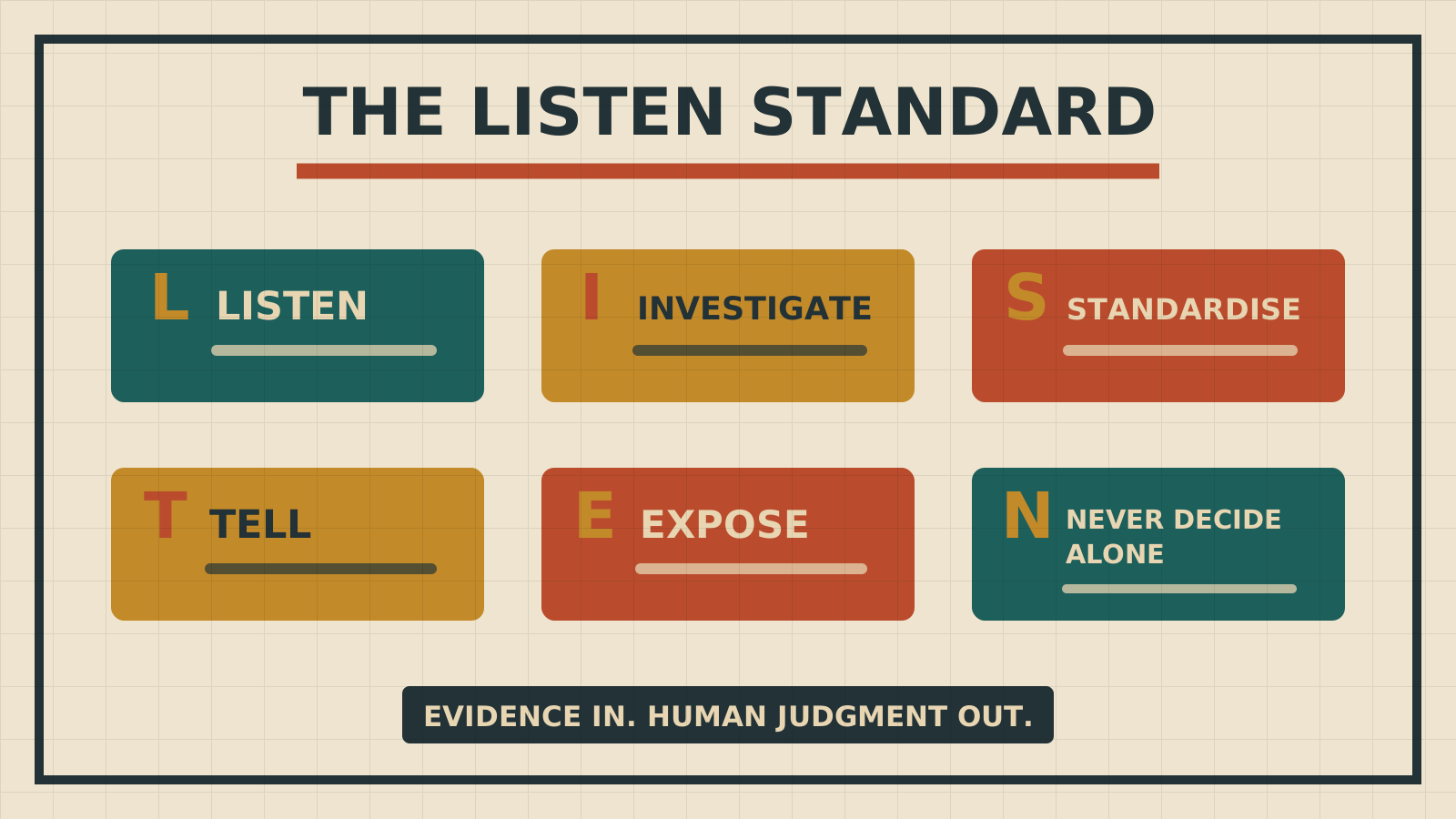
A genuine AI interview should meet six conditions. Together, they form what we call the LISTEN standard.
It should listen to the substance of the candidate's answer. The next step should be capable of changing when the answer contains something relevant, incomplete or unclear.
It should investigate claims without turning the interview into an interrogation. Follow-ups should seek job-related evidence, not wander into personal territory or reward candidates for simply speaking longer.
It should standardise the assessment. Adaptation should not mean improvisation without boundaries. Candidates should still be evaluated against consistent capabilities and criteria.
It should tell candidates how AI is being used. People deserve to know that they are interacting with a system, what information is being collected, who will review it and where they can go if they need assistance.
It should expose the evidence to the employer. A recruiter or hiring manager should be able to inspect what the candidate actually said instead of receiving an unexplained recommendation.
Finally, it should never make the final hiring decision alone.
That last condition is fundamental.
AI can ask questions at scale. It can preserve answers, produce transcripts and help organise evidence. It can reduce scheduling pressure and make a first-round interview available to applicants who might otherwise be rejected from their CVs.
But a consequential decision should still belong to an accountable person.
This is the boundary HireMike is designed around. HireMike supports the interview; it does not inherit the employer's responsibility. The system gathers and organises information so that a person can make a more informed decision.
The distinction is explored more broadly in our guide to what should remain human in automated hiring.
Conversational AI Can Still Conduct a Bad Interview
The ability to ask a follow-up does not automatically make a system fair, accurate or useful.
A poor AI interviewer may interrupt candidates, misunderstand speech, repeat questions or pursue irrelevant details. It may produce confident summaries that omit important context. It may create difficulties for candidates with disabilities, limited bandwidth or an unsuitable environment for speaking aloud.
There is also a danger that employers will treat automation as permission to stop paying attention.
A beautifully organised report can still be based on a badly designed question. A numerical score can create the appearance of precision without proving that the underlying assessment is valid. A follow-up can sound intelligent while investigating something unrelated to performance in the job.
Employers therefore need to evaluate the entire process, not merely the sophistication of the conversation.
Are the questions based on the actual requirements of the role? Can the employer inspect the candidate's full answer? Are candidates told how their information will be used? Is there a route to support or an alternative where necessary? Does a person have both the authority and the responsibility to challenge the system's output?
Accessibility is particularly important. The US Equal Employment Opportunity Commission's guidance on AI in employment decisions explains how algorithmic tools can disadvantage people with disabilities when employers fail to consider accessibility and reasonable accommodation.
The correct response is not to reject every use of AI. It is to remember that purchasing a tool does not transfer the employer's obligations to the tool.
HireMike's value does not come from pretending that software possesses perfect judgment. It comes from giving employers a structured way to hear from more candidates and examine more complete evidence than a CV or fixed recording typically provides.
The Alternative Is Not Always a Human Conversation
Discussions about AI interviews often compare them with an ideal alternative: a thoughtful recruiter who has read the candidate's application, understands the role, asks perceptive questions and gives the candidate time to ask questions in return.
Where that alternative is available, it is valuable.
But it is not what every applicant currently receives.
The more common alternative may be a recruiter spending seconds on a CV. It may be a founder reviewing applications late at night and choosing the five people whose experience is easiest to recognise. It may be an applicant tracking system filtering out candidates before anyone examines the substance of their work.
For many candidates, the real choice is not between AI and a human interview. It is between an AI interview and no interview at all.
That context helps explain the results of a field experiment involving more than 70,000 real job applications. According to the research summary from Chicago Booth's Center for Applied Artificial Intelligence, 78% of candidates who were offered a choice selected an AI interview.
That finding does not prove that candidates universally prefer AI. It certainly does not prove that every AI system is well designed.
It suggests something more modest: candidates may accept AI when it gives them a genuine opportunity to be considered.
This is where HireMike can change the economics of first-round interviewing. A hiring manager no longer has to repeat the same initial call twenty times before learning which candidates warrant a longer conversation. HireMike can conduct the structured first round, pursue relevant evidence and give the manager material to review.
The manager still meets the people who progress. Candidates still need an opportunity to ask questions, evaluate the organisation and decide whether they want the job. The relationship has not been removed. The first step has been made more available.
When One-Way Video Is Enough—and When It Is Not
There is no reason to turn every application into a complex conversation.
If an employer wants a short introduction, confirmation of working hours or an explanation of why the role interests the candidate, a recorded response may be sufficient. In some cases, a written form would be even simpler and less burdensome.
One-way video becomes less suitable when the employer is asking candidates to provide evidence of judgment, skill or experience.
“Tell us why you want this job” may not require a follow-up.
“Tell us how you would respond to a customer threatening to cancel a major account” almost certainly benefits from one.
The same is true of questions about leadership, decision-making, technical reasoning, conflict, failure and learning. The value of these questions lies not only in the story a candidate chooses to tell, but in whether the story can be explored.
Employers comparing different interview methods should therefore begin with the kind of evidence they need.
If the answer is simple and factual, recording may be enough.
If the answer needs context, clarification or challenge, conversation matters.
What Employers Should Examine Before Buying an AI Interview Tool
The market increasingly uses the language of AI to describe products with very different capabilities. Employers should look beyond the label.
A platform should be able to explain whether its questions respond to the candidate or merely appear in sequence. It should show the employer the candidate's real answers, not only an abstract score. It should explain what information it analyses and whether it attempts to infer personality, emotion or suitability from a candidate's face, voice or appearance.
Employers should also understand who controls the questions, how the assessment criteria are defined, how long candidate data is retained and what happens when a candidate needs assistance.
Most importantly, the vendor should be able to answer a simple question:
Who makes the decision?
If the answer is an opaque model that produces an unchallengeable verdict, the employer has automated the wrong part of hiring.
HireMike takes a different position. AI can conduct the structured first-round conversation and organise the evidence. The employer must still read, consider and decide.
Our guide to choosing the best AI interview tools for small businesses examines these questions in greater detail.
The Camera Was Never the Interviewer
A camera can preserve an answer perfectly. It can capture every word, pause and expression. But it cannot become curious about what it has heard.
That is why the distinction between one-way video and conversational AI matters.
The real choice is not between an old technology and a newer one. It is between passive collection and active inquiry. It is between asking candidates to perform into a silent system and giving them an opportunity to develop the evidence on which they will be judged.
HireMike was built for the moment after the first answer—the moment when an experienced interviewer would lean forward and say:
“Tell me more about that.”
The system asks. The candidate explains. The evidence becomes clearer.
Then a person decides.
That is not the removal of human judgment from hiring. It is a way to ensure that human judgment has something better to work with.
A recording preserves an answer.
An interview examines it.