
Job Boards for Small Business: Where to Post
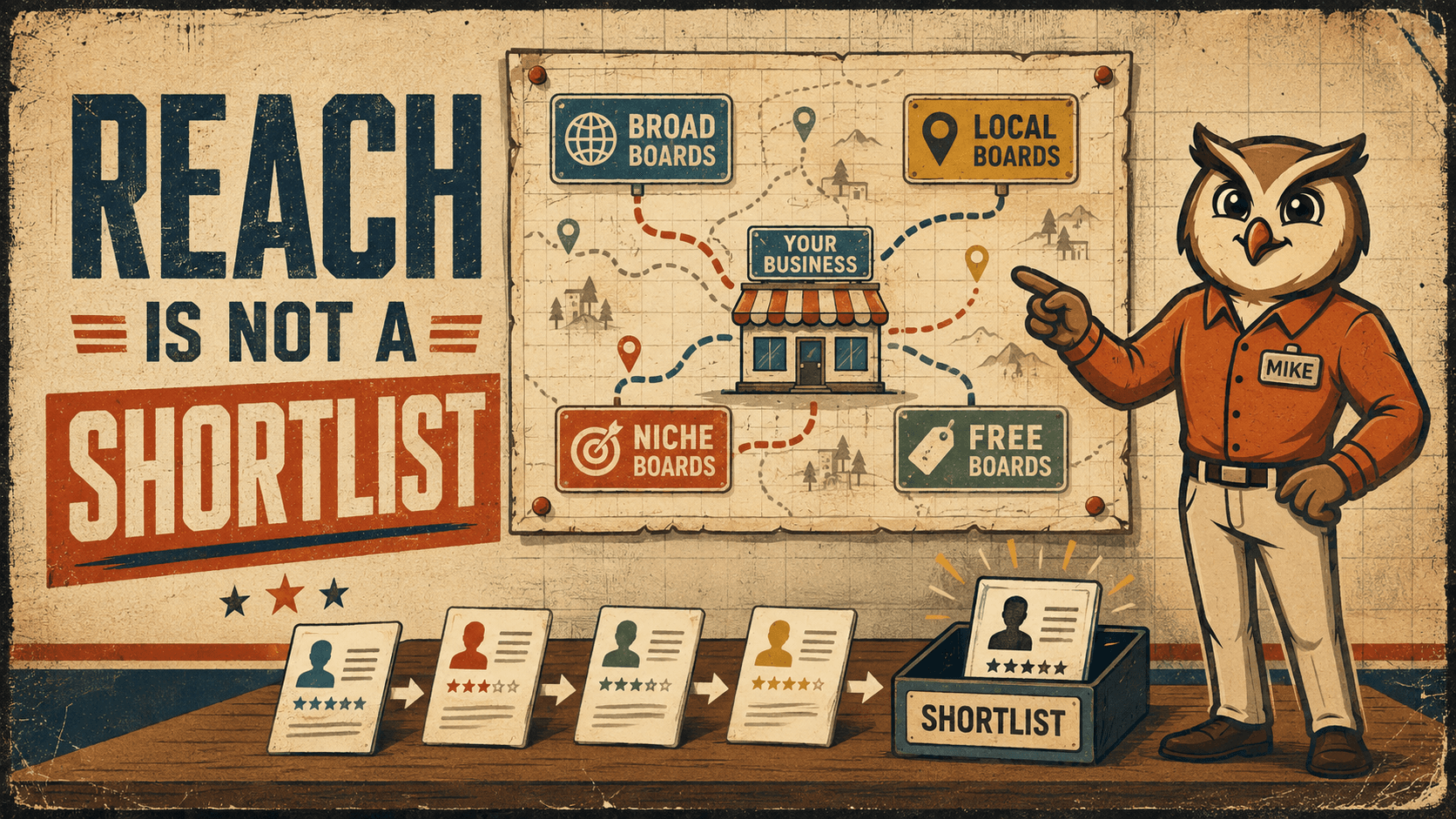
Most small businesses do not need more places to post a job. They need to know which one to try first.
That is the part most job-board lists skip. They name the same big platforms, add a few niche options, and leave the hiring manager with the same problem in a slightly neater wrapper. Post everywhere and you waste money. Post in the wrong place and you waste a week. Post in the right place but review applications badly, and the best candidate may still disappear into the pile.
At HireMike, we have seen this pattern often enough to separate applicant volume from hiring progress. A job board can send candidates to your door. It cannot decide which candidates deserve your time.
This guide explains the best job boards for small business hiring, how to choose between free and paid posting options, when local or niche boards matter, and what to do after applications start arriving.
The short answer
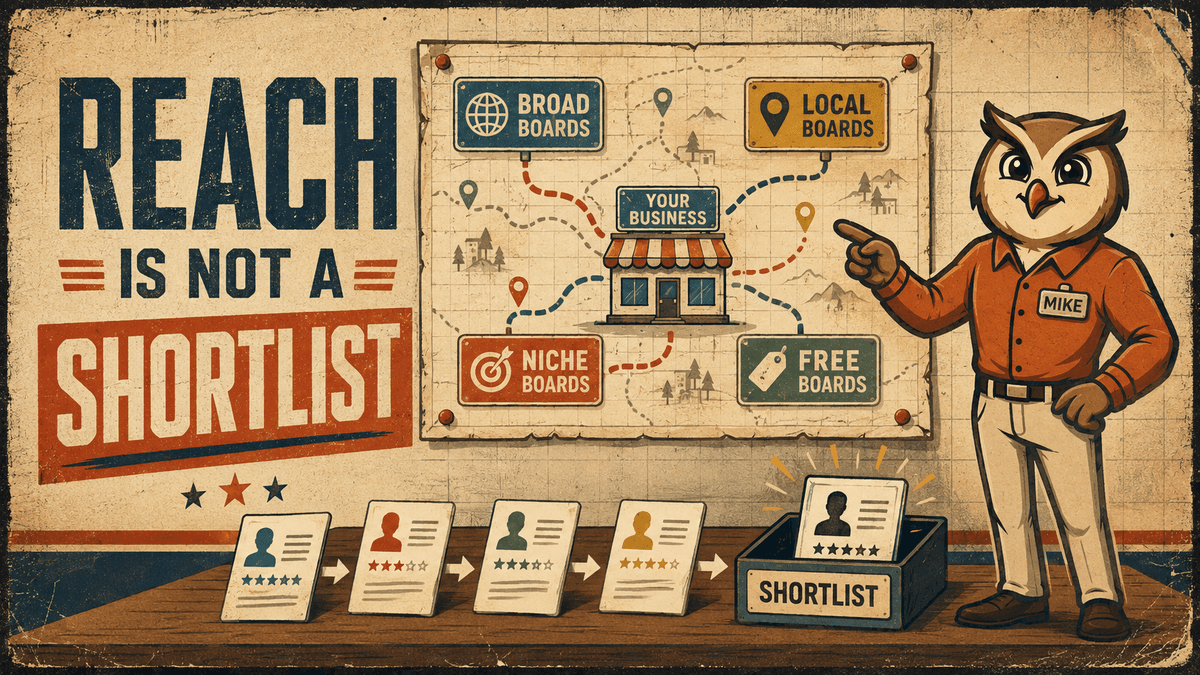
The best job board for a small business depends on the role, market, budget, and urgency.
Use this as the starting point:
| Hiring situation | Best place to start | Why it works |
|---|---|---|
| General local role | Indeed, Google-visible job post, local job board | Broad reach and simple discovery. |
| Hourly or shift-based role | Snagajob, local classifieds, community groups | Better match for part-time, shift, and service work. |
| Professional or salaried role | LinkedIn, Indeed, specialist industry board | Better for candidates who compare roles by company and career path. |
| Startup or early-stage role | Wellfound, LinkedIn, startup communities | Better for people who understand small-team ambiguity. |
| Graduate or early-career role | Handshake, universities, local training providers | Better for entry-level roles with trainable skills. |
| Remote role | LinkedIn, remote-specific boards, specialist communities | Better reach beyond the local market. |
| Tight budget | Free job posting sites, Google-indexed careers page, local communities | Useful before paying for traffic. |
| Specialist role | Niche industry job board | Smaller audience, but often better relevance. |
No job board is universally best. The right question is not "Where can I get the most applicants?" It is "Where can I get enough suitable applicants without creating a review problem I cannot handle?"
HireMike Insight
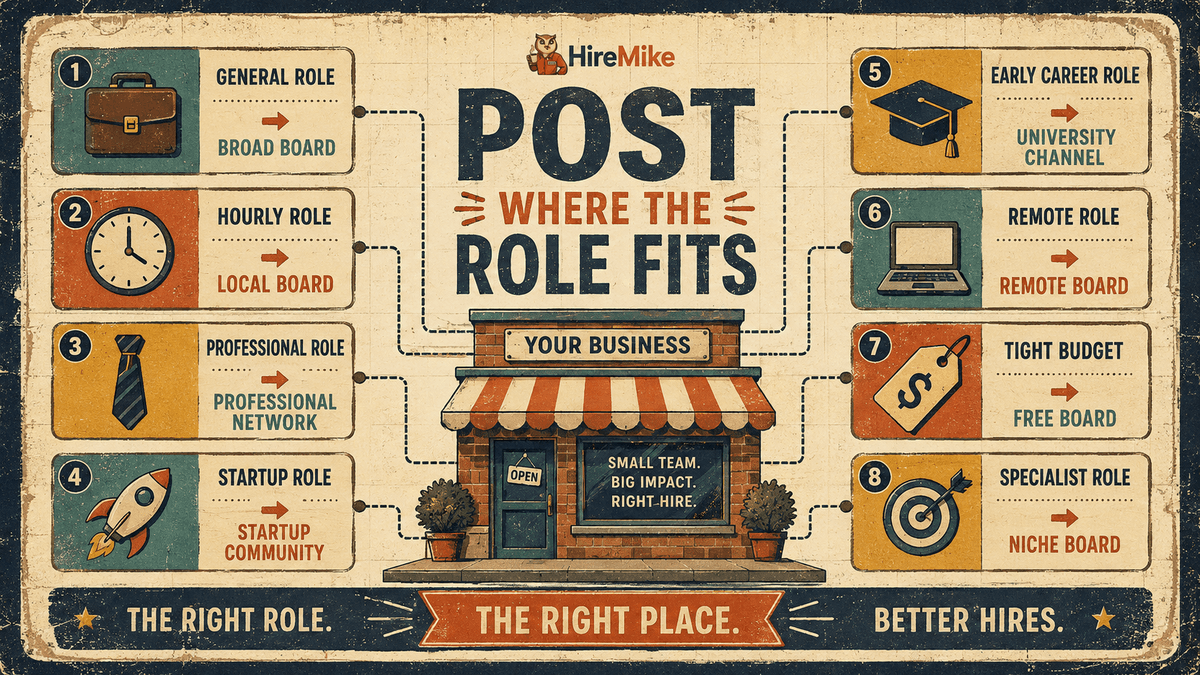
We see small businesses confuse applicant flow with hiring progress all the time. Forty applications can feel like momentum until the owner realises they still have to read, compare, message, schedule, and decide. The job board starts the process. It does not finish it.
Before choosing a job board, define the role properly
Job-board performance starts before you post.
If the role is vague, every platform will look worse than it is. You will attract candidates who are guessing what the job means, and then you will spend time sorting through applications that should never have arrived.
Before posting, write down:
- The work the person must actually do.
- The skills or experience that are required on day one.
- The skills that can be trained.
- The location, schedule, pay range, and employment conditions.
- The non-negotiable eligibility requirements.
- The reason a good candidate should choose this role.
That last point matters. Small businesses often write job ads as if candidates are lucky to be considered. Good candidates are making a decision too. If the ad does not explain the role clearly, better applicants may skip it.
For more detail on this stage, see HireMike's guide to screening job applicants. Screening starts with the criteria you set before the first resume arrives.
Best job boards for small businesses, by use case
The practical way to compare job boards is by hiring situation.
1. Indeed for broad local reach
Indeed is usually one of the first places small businesses consider because it has broad search demand and a familiar application flow. It can work well for general roles, local roles, and positions where you need a wide applicant pool quickly.
Indeed for Employers gives employers free and paid posting options, depending on the market and role. The paid side can help increase visibility, but it can also make a simple hire expensive if the job ad is unclear or the screening process is weak.
Use Indeed when:
- The role is common enough that many candidates will search for it.
- You want broad reach quickly.
- You can screen a larger number of applications.
- You have a clear job title that candidates already recognise.
Be careful when:
- The role is specialist.
- Your job title is unusual.
- You do not have time to review many applications.
- You are likely to pay for visibility before fixing the job ad.
Indeed is a reach tool. Treat it that way.
2. LinkedIn for professional, salaried, and network-driven roles
LinkedIn job posts are useful when the role depends on professional background, industry context, or passive interest from people who may not be actively searching every day.
It is often stronger for salaried roles than for high-volume hourly hiring. It also helps when your company page, founder profile, or manager profile gives candidates a reason to trust the business.
Use LinkedIn when:
- The role is professional, managerial, technical, or remote.
- The hiring manager has a credible network.
- Candidates are likely to research the business before applying.
- Employer credibility matters as much as raw applicant volume.
Be careful when:
- You need shift workers fast.
- The role is local and transactional.
- Your company page gives candidates very little context.
A LinkedIn job post often works better when the hiring manager also shares the role personally. The post creates the listing. The human context creates trust.
3. Google-visible job posts for businesses with their own website
If your business has a careers page, make the job easy for Google to understand.
Google Search Central provides JobPosting structured data guidance for pages that advertise open roles. Structured data does not guarantee visibility, but it helps search engines understand the role, location, pay, employment type, and application details.
Use a Google-visible careers page when:
- Your business already has local search demand.
- Candidates may search your brand plus "jobs."
- You want a permanent place to send applicants.
- You want to avoid relying entirely on paid job-board traffic.
Be careful when:
- The page is not maintained.
- Old jobs stay live after being filled.
- The application process is unclear.
For small businesses, a simple careers page can be useful even if it does not generate huge traffic. It gives every other channel a clean destination.
4. Local job boards for market fit
Local boards matter because hiring is local more often than software companies like to admit.
If you are hiring in Nigeria, platforms such as Jobberman, MyJobMag, and Fuzu may appear prominently. In the UK, Australia, Canada, South Africa, India, and other markets, different local boards may carry more trust for specific roles. The same principle applies everywhere: use the board candidates in that market already trust.
Use local job boards when:
- The role requires local availability.
- Candidates are likely to search by city or country.
- Local salary expectations matter.
- The role depends on market-specific qualifications or working rights.
Be careful when:
- You assume a global platform will outperform local discovery.
- You post only on local boards for a remote role.
- You do not adapt the job ad to local expectations.
The right local board is not always the biggest one. It is the one your likely candidates actually use.
5. Niche job boards for specialist roles
Niche boards are smaller by design. That is the point.
For technical, healthcare, nonprofit, creative, education, hospitality, construction, or industry-specific roles, a niche board can outperform a general board because the audience is already filtered.
Use niche boards when:
- The role requires specific experience.
- General boards produce too many irrelevant applications.
- The industry has active communities or associations.
- Candidates identify strongly with a profession or trade.
Be careful when:
- The board has very low activity.
- Pricing is high but candidate reach is unclear.
- You need a hire urgently and cannot wait for a smaller audience.
Niche boards work best when the role is specific and the job ad proves you understand the field. A generic ad on a specialist board still reads like a generic ad.
6. Free job posting sites when budget is tight
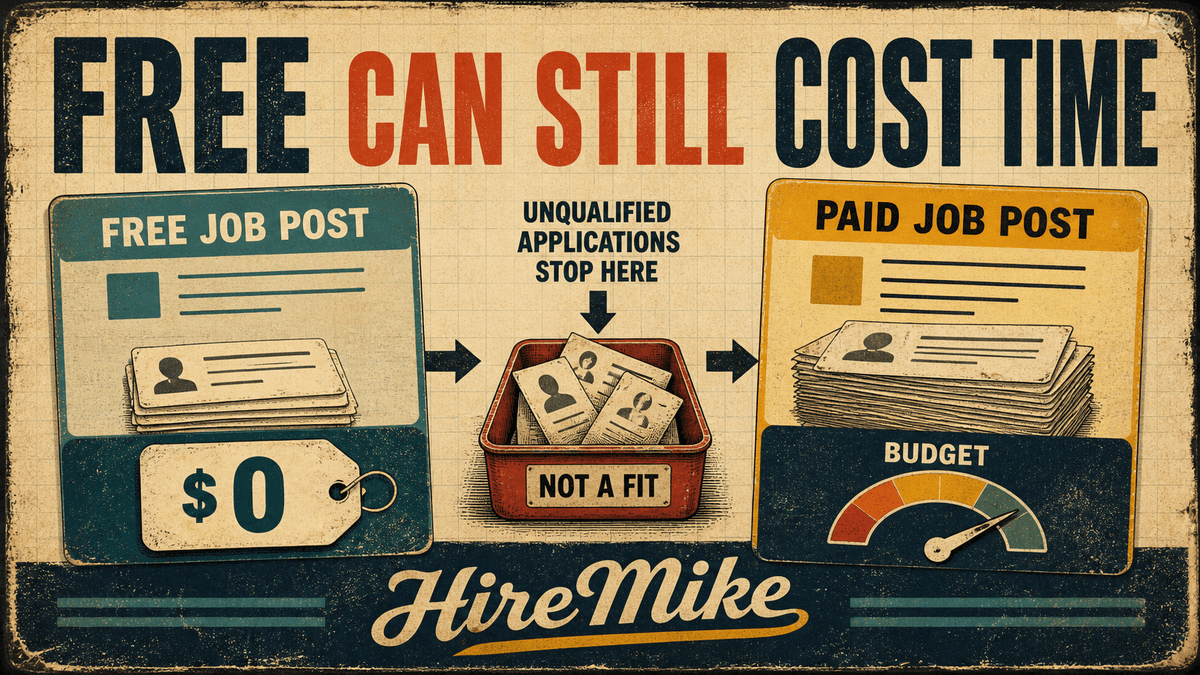
Free job posting sites can be useful, especially for a small business testing a role, hiring locally, or trying to avoid paid spend before understanding the market.
The risk is not that free boards are bad. The risk is assuming "free" means "cheap" after you count the review time.
Use free job posting sites when:
- The role is straightforward.
- You have time to review applications.
- You are testing the market.
- You have clear knockout criteria.
Be careful when:
- A free post produces many unsuitable applications.
- You do not have a screening process.
- You leave poor-fit candidates waiting without a response.
This is where small teams get caught. A free post can create an expensive inbox.
HireMike Insight
The hidden cost of a job board is not always the posting fee. It is the time spent reviewing candidates who were never likely to fit the role. Free traffic is only free if you can screen it properly.
7. Handshake and university channels for early-career roles
Handshake and university career services can be useful when the role is entry-level, internship-based, or suitable for recent graduates.
Use these channels when:
- You can train the person.
- The role has clear support and supervision.
- You are hiring for potential rather than deep experience.
- You can explain the learning path clearly.
Be careful when:
- You need someone independent from day one.
- The role is underdefined.
- You do not have time to train.
Early-career hiring works best when the expectations are explicit. Do not advertise a junior role and then screen as if you need a senior person.
8. Community groups and local business networks
Community groups are not traditional job boards, but they can be useful for local hiring.
This includes business associations, local Facebook or LinkedIn groups, alumni groups, coworking communities, trade groups, and professional Slack or Discord communities where appropriate.
Use community channels when:
- Trust matters.
- The role is local or relationship-driven.
- You can write a clear, respectful post.
- The group allows hiring posts.
Be careful when:
- The group has rules against job ads.
- You post too often.
- You rely on informal referrals without a fair screening process.
Community sourcing can bring strong candidates, but it can also narrow the pool. Keep the assessment consistent once people apply.
Free versus paid job boards
Start free when the role is simple, the market is active, and time is not the biggest constraint.
Pay when you need more visibility, faster reach, or access to a specific audience.
The mistake is paying before the role is clear. Paid promotion amplifies the job ad you already have. If the ad is vague, paid promotion gives you more vague-fit applications.
Use this test before paying:
| Question | If yes | If no |
|---|---|---|
| Is the job title clear and searchable? | Paid reach may help. | Fix the title first. |
| Is the pay range competitive for the market? | More visibility can work. | More visibility may only prove the offer is weak. |
| Are must-haves clear? | Paid traffic can be screened. | You may pay for unsuitable volume. |
| Can you review applications quickly? | More applicants are manageable. | Paid traffic may create a backlog. |
| Do you know where similar candidates search? | Choose a focused board. | Test one low-cost channel first. |
Paid job boards are not the enemy. Paying too early is.
How to choose the right job board
Use a simple scoring model before spending money.
Score each board from 1 to 5:
| Criterion | What to ask |
|---|---|
| Candidate relevance | Does this board reach people who are likely to do this job? |
| Local fit | Does it work in the market where we are hiring? |
| Role fit | Is it strong for this type of role? |
| Cost control | Can we test it without committing too much budget? |
| Applicant quality | Does it tend to produce candidates worth screening? |
| Review workload | Can we handle the likely application volume? |
Do not choose the board with the highest reach if you cannot process the response. Choose the board that gives you enough of the right applicants.
For small businesses, "enough" is a useful word. You do not need 300 applications. You need a qualified shortlist.
Write the job post for the board you choose
Different boards reward different levels of detail, but every good job post needs the same foundation.
Include:
- A normal job title candidates would search for.
- A plain-language summary of the work.
- Pay range or pay expectations where appropriate.
- Location and remote/hybrid expectations.
- Schedule and availability requirements.
- Must-have qualifications or licences.
- What the first three months will involve.
- How the process works after application.
Avoid:
- Inflated titles.
- Vague phrases such as "fast-paced environment" without explanation.
- Long lists of nice-to-have requirements.
- Culture claims that do not describe real behaviour.
- Hiding conditions that will matter later.
The job post should reduce poor-fit applications before they happen. A clear post is the first screening step.
Use knockout questions carefully
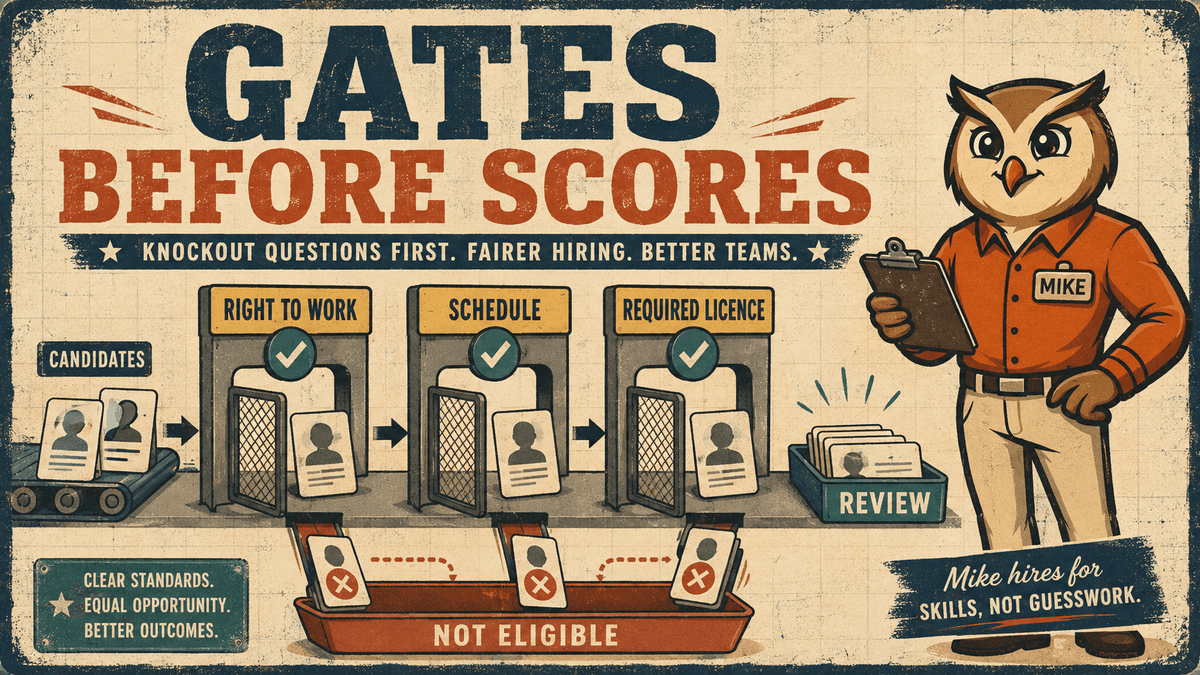
Knockout questions are useful when they check true requirements.
Good knockout questions include:
- Do you currently have the right to work in the required country?
- Can you work the stated schedule?
- Do you hold the licence required for this role?
- Are you able to work from the required location?
- Are you available to start within the required timeframe?
Weak knockout questions include:
- Are you hardworking?
- Are you a team player?
- Are you passionate about customer service?
- Can you work under pressure?
Those questions do not filter. They invite the answer everyone knows they are meant to give.
Keep knockout questions separate from scored suitability. A missing legal requirement is not the same as a weaker interview answer. One is a gate. The other is evidence to compare.
That distinction also supports fair hiring practices, because every candidate is assessed against the same role-related requirements.
What to do after candidates start applying
This is where most small-business hiring processes wobble.
The job board has done its job. Applications are arriving. Now the hiring manager has to review resumes, compare experience, send messages, ask first-round questions, schedule interviews, and keep the process moving while also running the business.
Use this sequence:
- Remove candidates who fail true knockout requirements.
- Screen every remaining resume against the same role criteria.
- Record evidence, not impressions.
- Use the same first-round questions for comparable candidates.
- Shortlist based on role fit, not application order.
- Communicate clearly with candidates who are not moving forward.
- Keep the final decision with a human reviewer.
If you receive too many applications, do not make the common mistake of reading only the first batch closely. That is not selection. It is inbox timing.
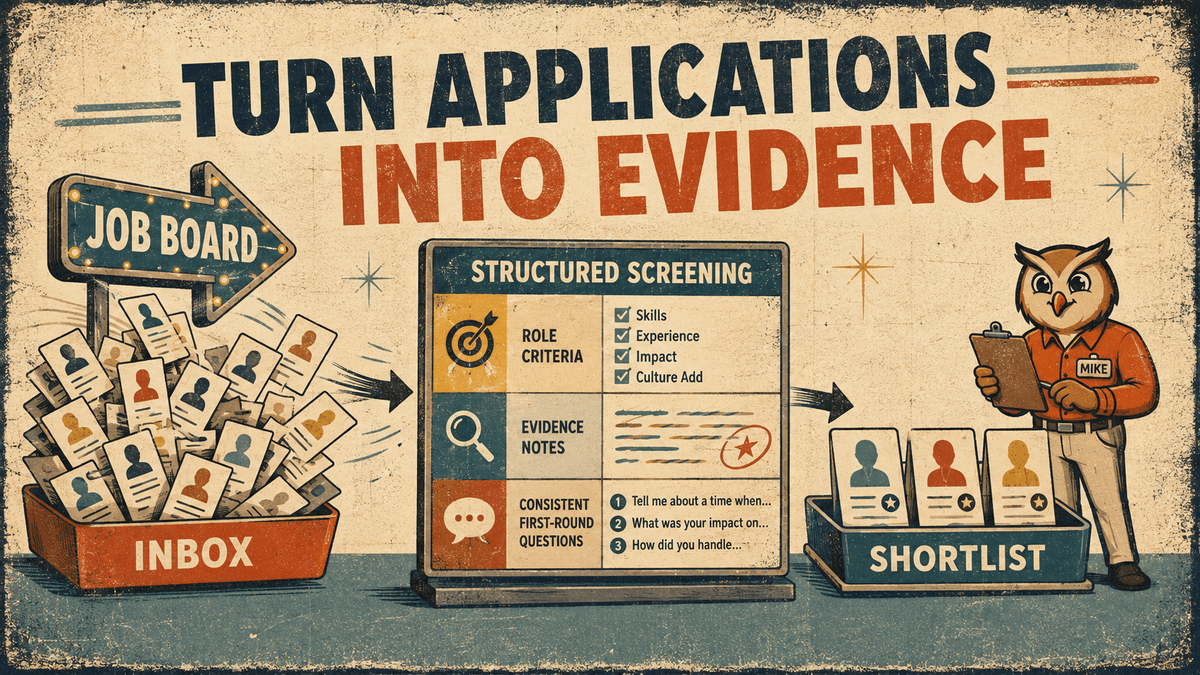
HireMike's guide to screening resumes explains how structured screening should work when the applicant pool is larger than one person can reasonably review by hand.
Where HireMike fits
HireMike does not replace job boards. It handles the work that begins after the job board sends applicants your way.
Post the role where the right candidates are likely to see it. Then use HireMike to screen applications against your criteria, ask consistent first-round questions, compare candidates with clearer evidence, and build a shortlist you can actually review.
That division matters. Job boards are for reach. HireMike is for screening.
If your main problem is that nobody is applying, fix the job ad, pay, location, or sourcing channel first. If your main problem is that applications are arriving and you do not have time to review them properly, HireMike was built for that moment.
For a broader tool comparison, see ATS for small business and candidate screening software.
Common mistakes small businesses make with job boards
Posting to too many boards at once
More boards can create more work before they create a better hire. Start with one or two channels. Measure applicant quality before expanding.
Using a job title candidates do not search for
"Customer Happiness Champion" may sound friendly inside the business. Candidates are searching for "customer support assistant." Use the title they recognise.
Paying to promote an unclear job ad
Paid reach will not fix weak positioning. It will show the weak ad to more people.
Treating local hiring like global hiring
If the role needs someone in a specific city, local discovery may beat a larger global board.
Letting the first applicants get the most attention
Early applicants often receive more careful review simply because the hiring manager still has energy. A structured process prevents timing from becoming an accidental advantage.
Forgetting candidate communication
Candidates remember silence. Even a short, respectful update is better than leaving people guessing.
Frequently asked questions
What are the best job boards for small business?
The best job boards for small business depend on the role. Indeed and LinkedIn are useful broad starting points, local boards help with market-specific hiring, niche boards can work better for specialist roles, and free job posting sites are useful when budget is tight. The best choice is the board that reaches enough suitable candidates without creating an application review problem.
Are free job boards worth using?
Yes, if the role is clear and you have a way to screen applications quickly. Free job boards can create useful applicant flow, but they can also produce a large number of unsuitable applications. The real cost is the time spent reviewing them.
Should a small business post on multiple job boards?
Not at first. Start with one broad board and one targeted channel if the role needs it. Review applicant quality before adding more boards. Posting everywhere can make the process harder to manage.
What is the best job board for local hiring?
The best local job board depends on the market. In some countries, major global platforms work well. In others, local job sites, community groups, or industry boards produce better candidates. Search the role title in your market and look at which boards already appear.
How much should a small business spend on job boards?
Spend only after the role, job title, pay range, and screening criteria are clear. If a free post produces suitable applicants, paid promotion may not be necessary. If you need faster visibility or a more specific audience, test paid promotion with a controlled budget.
What should I do after posting a job?
Set up a screening process before applications arrive. Use knockout questions for true requirements, screen resumes against consistent criteria, ask the same first-round questions, and keep candidate communication clear. The job board creates applicants. The screening process creates the shortlist.
The best board is only the start
Choosing the right job board matters. It affects who sees the role, how many people apply, and how much the process costs.
But the job board is only the start of the hiring decision.
A small business still needs to decide who is qualified, who deserves an interview, what evidence matters, and how to compare candidates fairly. That is where the process either becomes clear or starts depending on memory, timing, and gut feel.
Use the job board to reach the market. Use a structured screening process to protect the decision.
If applications are already arriving and the review work is starting to take over, see how HireMike helps small teams screen candidates.