
How to Screen Job Applicants: A Practical Guide for Small Businesses
Hiring for a new role can be exciting, until the applications start pouring in. What begins as a search for the right person can quickly become hours of reading resumes, comparing qualifications, and deciding who deserves an interview. For small businesses, this challenge is even greater. Without a dedicated HR team or recruiter, screening job applicants often falls to a business owner or hiring manager already juggling countless responsibilities. The result? Rushed decisions, inconsistent evaluations, or promising candidates slipping through the cracks.
An effective applicant screening process helps you focus your time on the candidates who are most likely to succeed in the role. Rather than reviewing every application in detail, you can use a structured approach to identify qualified applicants, eliminate those who don't meet essential requirements, and move the strongest candidates forward with confidence.
In this guide, you'll learn how to screen job applicants efficiently, avoid common screening mistakes, and build a repeatable process that helps you make better hiring decisions. For the larger system around this step, use HireMike's practical hiring resource hub and its guide to screening applications against one scorecard.
What Does It Mean to Screen Job Applicants?
Screening job applicants is the process of reviewing applications to determine which candidates should advance to the next stage of hiring. It typically takes place after applications are submitted but before formal interviews begin.
The goal isn't to find your ideal employee immediately. Instead, it's to narrow a large pool of applicants into a smaller shortlist of candidates who meet the essential requirements for the role. A typical candidate screening process may include:
- Reviewing resumes and cover letters
- Evaluating qualifications and relevant experience
- Asking pre-screening questions
- Conducting brief phone or video screenings
- Assessing job-related skills
- Verifying references or background information before making an offer
When done consistently, applicant screening saves time, reduces hiring bias, and improves the quality of candidates who reach the interview stage.
Prepare Before You Review Applications
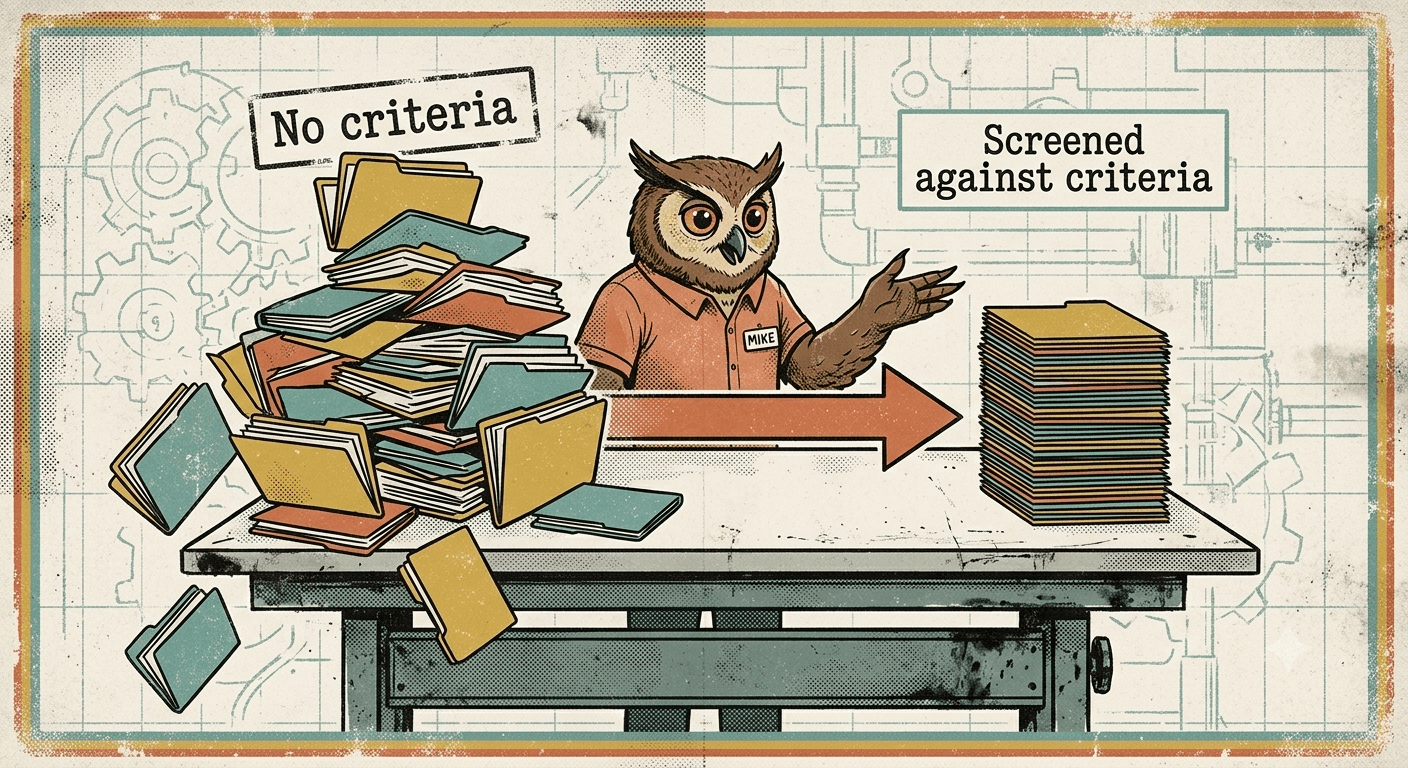
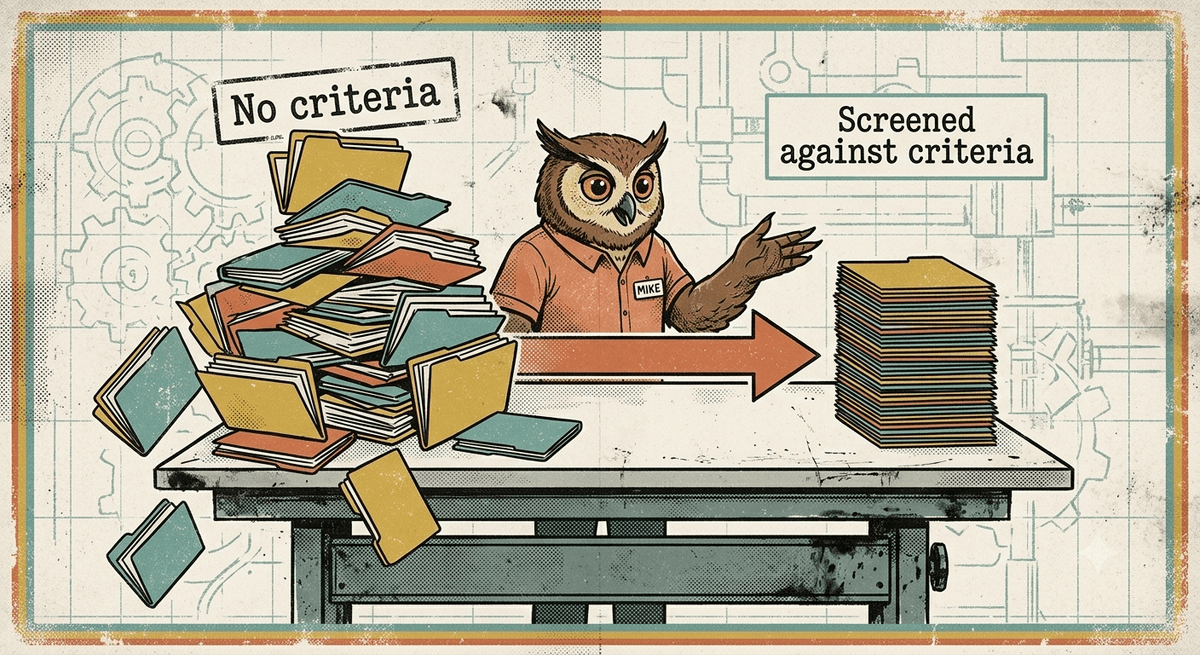
One of the biggest mistakes employers make is opening resumes before deciding exactly what they're looking for. Without clear screening criteria, every application feels like a new decision. You may find yourself changing your standards halfway through the hiring process or giving more attention to candidates simply because their resume looks more polished.
Before reviewing a single application, create a simple hiring blueprint. Start by identifying the qualifications that are absolutely necessary for success in the role. The one-page role brief template is a useful way to capture those decisions before applications arrive. These might include:
- Required technical skills
- Relevant industry experience
- Certifications or licences
- Availability or work authorisation
- Location requirements, if applicable
Next, separate your must-have requirements from your nice-to-have qualifications. For example, if you're hiring a customer support representative, previous customer service experience may be essential, while experience with a specific CRM platform could be something a new hire can learn during onboarding.
Finally, decide how you'll evaluate every applicant. Even a basic scorecard can make your screening process more consistent:
| Criteria | Weight |
|---|---|
| Relevant experience | 30% |
| Required skills | 30% |
| Communication quality | 20% |
| Education or certifications | 10% |
| Culture and role fit | 10% |
Using the same criteria for every candidate helps you compare applicants fairly instead of relying on instinct alone.
A Step-by-Step Process to Screen Job Applicants
Once you've established your screening criteria, it's time to evaluate applications systematically. Following the same process for every candidate helps reduce bias, improve consistency, and make hiring decisions more confidently.
1. Review Resumes Strategically
Resume screening is often the first step in evaluating candidates, but it shouldn't become an exercise in reading every line of every application. Instead, focus on the information that matters most for the role.
Start by checking whether the applicant meets your minimum qualifications. If a role requires three years of experience with digital marketing, for example, a candidate with no marketing background is unlikely to be the right fit regardless of how well-designed their resume may be.
Look beyond job titles and pay attention to measurable achievements. A candidate who writes, "Increased customer retention by 18%," provides stronger evidence of impact than someone who simply lists responsibilities.
It's also important not to rely exclusively on keyword matching. While keywords can help identify relevant skills, exceptional candidates sometimes describe their experience differently. Evaluate the overall relevance of their background rather than searching for exact phrases.
If resume review is the stage slowing the process down, compare the manual approach with resume screening software built for small teams before adding more interview steps.
At this stage, your objective is simple: identify applicants who clearly meet your core requirements and set aside those who don't.
2. Use Pre-Screening Questions to Save Time
Pre-screening questions allow you to filter candidates before scheduling interviews. These short questions confirm whether applicants meet your essential requirements and can significantly reduce the number of resumes you need to review manually.
Depending on the position, you might ask questions such as:
- Are you legally authorised to work in this country?
- Are you available to work the required schedule?
- What are your salary expectations?
- Do you have experience using specific software or tools required for the role?
- Are you willing to work from our office or travel if necessary?
Keep these questions focused on genuine job requirements rather than creating unnecessary barriers for applicants. When used thoughtfully, pre-screening questions help both employers and candidates: applicants immediately understand whether the role is a good fit, while hiring managers spend less time reviewing unsuitable applications.
3. Conduct Short Phone or Video Screenings
Not every promising resume translates into a strong interview. A brief phone or video screening, typically lasting 15 to 30 minutes, helps you verify key information before investing time in longer interviews.
This conversation isn't designed to assess every competency. Instead, it should answer a few essential questions:
- Can the candidate clearly explain their experience?
- Why are they interested in the role?
- Do their expectations align with what you're offering?
- Are there any concerns that need clarification before a formal interview?
Keep the conversation structured by asking every candidate a consistent set of questions. This makes comparisons easier and creates a fairer evaluation process.
It's equally important to provide candidates with a positive experience. Let them know what the conversation will cover, allow time for their questions, and explain the next steps before ending the call. Clear communication reflects well on your business and helps maintain candidate engagement throughout the hiring process.
4. Evaluate Job-Related Skills
Resumes tell you what candidates say they can do. Skills assessments help you see what they can actually do.
Whenever possible, choose assessments that closely reflect the work the candidate would perform if hired. For example:
- A content writer could complete a short writing assignment.
- A software developer might solve a practical coding task.
- A customer support representative could respond to sample customer enquiries.
- An administrative assistant might complete a scheduling or spreadsheet exercise.
The goal isn't to overwhelm applicants with lengthy tests. Instead, provide realistic tasks that allow candidates to demonstrate the skills most important to the role. Keep assessments relevant, proportionate, and respectful of candidates' time. A focused 30-minute exercise often reveals more about job readiness than a complicated multi-hour assessment.
5. Verify References and Background Information
Reference and background checks are typically the final step before extending an offer. Rather than treating them as a formality, use them to confirm the information you've already gathered throughout the hiring process.
When speaking with references, focus on questions that help you understand how the candidate performed in real workplace situations. Ask about reliability, collaboration, communication, problem-solving, and overall strengths rather than simply confirming employment dates.
If your organisation conducts background checks, ensure they are relevant to the role and comply with applicable employment laws and regulations. By leaving this step until you've identified your preferred candidate, you avoid unnecessary work while gaining additional confidence before making a hiring decision.
Common Mistakes When Screening Job Applicants
Even with a structured process, it's easy to make screening decisions that slow down hiring or cause you to overlook strong candidates. Being aware of these common mistakes can help you build a more consistent and effective hiring process.
Judging resumes too quickly. Hiring managers often spend only a short time reviewing each resume. While efficiency is important, making snap decisions based on formatting, employment gaps, or unfamiliar company names can cause you to miss qualified candidates. Instead, focus on whether an applicant demonstrates the skills, experience, and achievements that matter most for the role.
Looking only for keywords. Many employers search resumes for exact keywords and reject applicants who don't use the same language as the job description. While keywords can be helpful, they shouldn't replace thoughtful evaluation. Candidates often describe similar experiences in different ways, and transferable skills may be just as valuable as direct industry experience.
Changing your criteria as you go. Without a defined scorecard, it's easy to compare each applicant against the previous one rather than against the requirements of the role. Establish your evaluation criteria before reviewing applications and apply them consistently throughout the hiring process.
Ignoring transferable skills. A candidate may not have held the exact job title you're hiring for but could still possess the problem-solving abilities, communication skills, or leadership experience needed to succeed. For many small businesses, hiring someone with strong potential and the ability to learn can be more valuable than hiring someone with a perfect résumé but limited adaptability.
Delaying communication with candidates. Lengthy gaps between screening stages can lead to candidate drop-off, especially in competitive job markets. Even if you haven't made a final decision, keeping applicants informed helps create a better candidate experience and reflects positively on your business. A simple update such as, "We're currently reviewing applications and expect to share next steps by Friday," provides clarity without making promises you can't keep.
How AI Can Help You Screen Job Applicants More Efficiently
As application volumes grow, many employers are turning to AI to reduce the administrative workload involved in candidate screening. Used responsibly, AI can help hiring teams:
- Summarise resumes to highlight relevant qualifications
- Organise applicants based on your predefined criteria
- Surface candidates whose experience aligns with the role
- Reduce the time spent reviewing repetitive information
- Keep hiring workflows organised as applications increase
However, AI works best as a support tool, not a decision-maker. Hiring involves more than matching keywords or comparing years of experience. Qualities such as communication, motivation, adaptability, and cultural contribution still require human judgement.
For small businesses without dedicated recruiting teams, AI can make the screening process more manageable by handling repetitive administrative tasks while allowing hiring managers to focus on evaluating the people behind the applications. Platforms like HireMike are designed with this balance in mind. Instead of replacing hiring decisions, they help employers streamline applicant screening, organise candidate information, and move qualified applicants through the hiring process more efficiently, giving small teams more time to focus on meaningful conversations with the people they're considering for the role. If the workflow fits your hiring problem, you can start with HireMike.
Frequently Asked Questions
How do employers screen job applicants?
Most employers screen job applicants by reviewing resumes, checking whether candidates meet the role's essential requirements, asking pre-screening questions, conducting brief phone or video interviews, evaluating job-related skills, and verifying references before making an offer. The exact process depends on the role, industry, and size of the organisation.
What is the difference between screening and interviewing?
Screening is the initial stage of the hiring process used to identify candidates who meet the basic requirements for a role. Interviews take place later and explore a candidate's experience, skills, and suitability in greater depth. Screening narrows the applicant pool, while interviews help determine who should receive the job offer.
Can AI screen job applicants?
Yes. AI can assist with tasks such as organising applications, summarising resumes, identifying relevant qualifications, and helping hiring teams prioritise candidates. However, hiring decisions should always involve human oversight to ensure fairness, context, and sound judgement.
Final Thoughts
Learning how to screen job applicants effectively isn't about rejecting candidates faster; it's about creating a fair, consistent process that helps you identify the people most likely to succeed in the role.
By defining your hiring criteria before reviewing applications, evaluating candidates consistently, using relevant skills assessments, and maintaining clear communication throughout the process, you can make better hiring decisions while reducing the time spent sorting through applications.
As your business grows, combining a structured screening process with tools that automate repetitive administrative work can make hiring more efficient without sacrificing the quality of your decisions. The result is a hiring process that's easier to manage, more consistent for every applicant, and better equipped to help you find the right person for your team.