The Interview Stage Is Overdue for a Rethink: Here's What Modern Hiring Looks Like
For decades, the job interview has looked more or less the same. A candidate submits their CV, someone on your team finds a gap in their calendar, a meeting is scheduled, questions are asked, notes are scribbled, and eventually, after a few more rounds of back-and-forth, a decision is made. It works. Sort of.
TL;DR: The traditional interview stage is broken for small businesses — slow scheduling, unstructured conversations, and bias-driven decisions. A modern interview stage uses structured AI-led screening for every candidate, consistent scorecards with documented criteria, and automated scheduling to compress a two-week process into hours while producing fairer, more comparable assessments.
But "works" is doing a lot of heavy lifting in that sentence. While the format has stayed the same, everything around it has changed. The talent market is faster, candidates have more options, and small businesses are expected to compete for the same people as companies with full HR departments and dedicated recruiting teams. Running a 2006 interview process in 2026 isn't just inefficient. It's quietly costing you candidates you never knew you lost, and it usually starts at the interview stage.
The Old Way Isn't Working Anymore
Ask any founder or small business owner who has hired recently, and the same frustrations come up. The back-and-forth to find a time that works. The candidate who seemed promising but went cold halfway through. The interview stage that felt more like a casual chat than a structured evaluation, because it was.
These aren't personal failings. They're the natural result of a process that was never designed for lean teams moving fast. Traditional hiring was built for a world where candidate pools were smaller and one person could reasonably manage the whole process without it eating their week.
That world no longer exists. And yet most small businesses are still running the same playbook, not because it's working, but because no one has handed them a better one.
What's Actually Breaking Down at the Interview Stage
The problems at the interview stage tend to cluster around three areas: speed, consistency, and bias.
Speed is the most visible. When a strong candidate applies, you're rarely the only one they've applied to. Every day your process drags is a day they're moving forward with someone else. Top candidates are typically off the market within 10 days, yet the average time-to-hire for many companies now exceeds 27 days. Slow scheduling, delayed feedback, and long gaps between stages don't just frustrate candidates. They eliminate them. The interview stage alone accounts for nearly a third of all candidate drop-off, more than the application stage itself.
Consistency is less obvious but just as damaging. When the interview stage is unstructured, different candidates get asked different questions, and decisions end up based on feel rather than evidence. Two equally qualified people can walk away with completely different impressions of your company, and you can walk away with completely different impressions of them, based on nothing more than how the conversation happened to go that day.
Bias follows directly from inconsistency. Without a structured framework, interviewers naturally gravitate toward candidates who remind them of themselves, who interview confidently, or who happened to catch them on a good day. This isn't malicious. It's human. Unstructured interviews are significantly more susceptible to bias than structured ones, with research showing that factors like confidence and tone, which have no bearing on job performance, influence up to 39% of rejection decisions. That means you're regularly missing people who would have been great in the role, and advancing people who are simply great at interviews.
What a Modern Interview Stage Actually Looks Like
A modern interview stage doesn't mean removing the human element. It means protecting it, by taking the administrative and inconsistent parts off your plate so you can focus on the decisions that actually require your judgment.
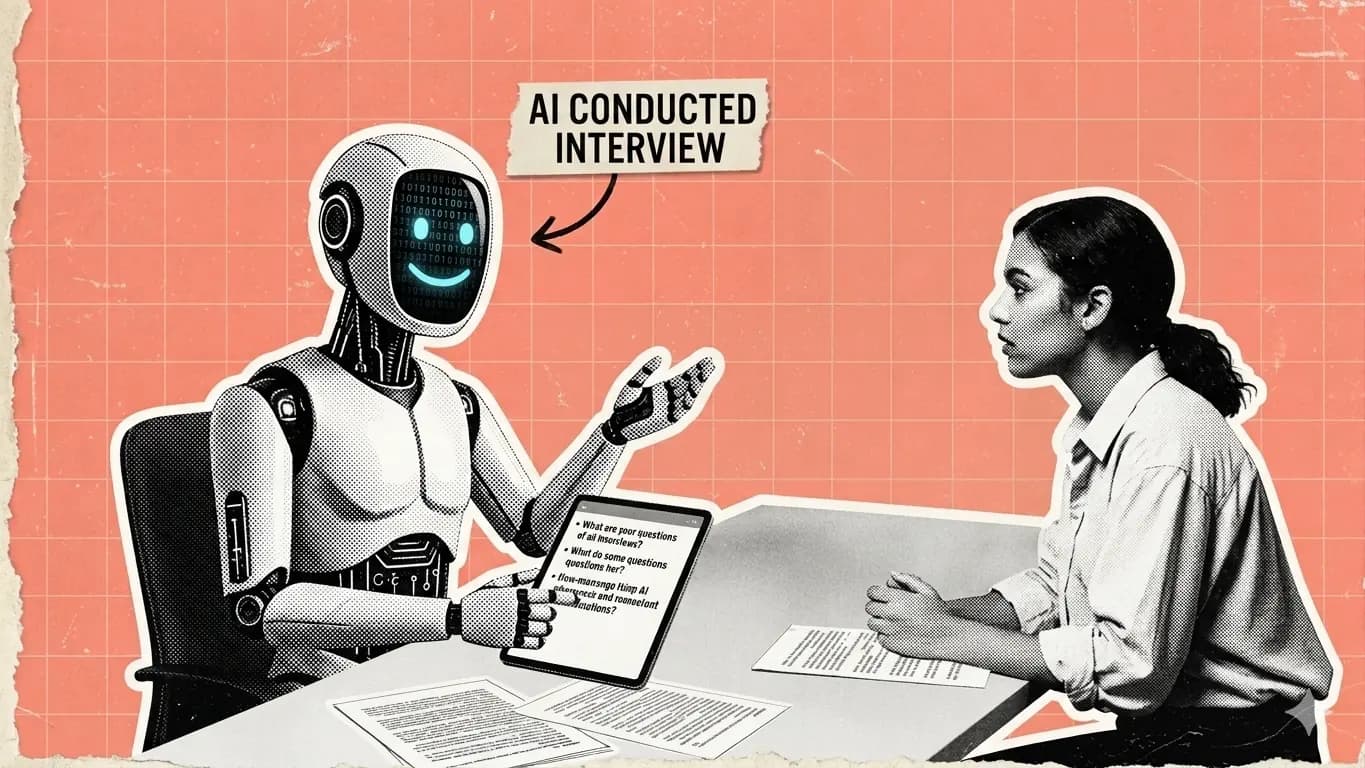
In practice, this looks like structured, consistent screening that every candidate goes through before you've invested significant time. It means AI-assisted evaluation that surfaces the most relevant candidates based on role-specific criteria, not just keyword matching on a CV. It means scorecards and transcripts that give you something concrete to compare, rather than relying on fading post-interview impressions. Without documentation, research shows that interviewers will almost certainly rely on their own bias rather than what the candidate actually said.
The result isn't a colder process. It's a fairer one. Every candidate gets the same questions, the same opportunity to demonstrate their thinking, and the same standard of evaluation. The ones who move forward do so because of their answers, not because they scheduled their interview on a Friday afternoon when you were in a good mood.
For small businesses, this also means speed. Automated first-stage screening can compress what used to take two weeks into a matter of hours, without you having to block off your calendar for every single applicant.
Why Small Businesses Stand to Gain the Most
Enterprise companies have recruiting teams, applicant tracking systems, and dedicated interviewers who do nothing else. They can absorb inefficiency because they have the infrastructure to manage it.
Small businesses don't have that buffer. When a founder is also the hiring manager, every hour spent on a bad-fit interview is an hour not spent on the business. A wrong hire can cost three to four times the position's annual salary in turnover, lost productivity, and remediation. When a 10-person team makes a wrong hire, it's felt immediately and deeply. The margin for error is thin.
This is exactly why a well-structured interview stage matters more for small businesses than for large ones. The efficiency gains matter more. The consistency matters more. The ability to move fast without cutting corners matters more.
Access is no longer the barrier it once was, either. Pay-per-use pricing models mean you don't need a six-figure recruiting budget or an annual software contract to modernise how you hire. You pay for what you use, when you use it.
Making the Shift
Rethinking your interview stage doesn't mean rebuilding your entire hiring process from scratch. It means identifying where the most time is lost. That's almost always at the screening and first-interview stage. Start by introducing structure there first.
Start with a consistent set of role-specific questions that every candidate answers before you meet them. Add a scoring framework so evaluations are based on criteria, not impression. Use the time you save to have better, deeper conversations with the candidates who actually make it through.
Small improvements at the interview stage have outsized impact on hire quality, process speed, and the experience you're creating for candidates. Nearly half of candidates say they would be less likely to recommend a company based on a frustrating interview scheduling experience alone. Your interview stage is a first impression. Make it count.
The Bottom Line
Modern hiring isn't about replacing human judgment. It's about getting to the right humans faster, with better information, and without burning out the people doing the hiring.
The interview stage has been the weakest link in small business hiring for a long time. The tools to fix it are available, affordable, and built for exactly this context. The only question is how long you're willing to wait before using them.